

- Home
- Products +
- About Us +
- Projects
- Application +
- News +
- Contact Us
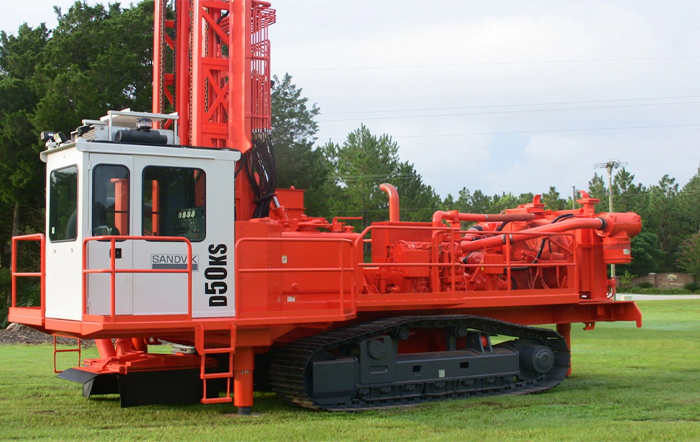
The Sandvik D50KS is designed for various open-pit mining operations, featuring an efficient drilling rod-shifting system that significantly reduces cycle times. With a maximum drilling depth of 45 meters, it delivers high performance in both soft and hard rock conditions.
Product Features
Open-type In-line Engine Design
The D50KS features an open-type in-line engine layout, enabling easy maintenance operations that effectively reduce operating costs and extend equipment service life.
Maximized Productivity
The cab features ergonomic design, offering unobstructed vision and enhanced comfort, significantly boosting operational efficiency and output capacity.
Robust Working Deck
The rotary drilling rig features a meticulously designed working deck that is mounted on a compact yet powerful drilling platform. This significantly enhances the rig's operational stability and support capacity.
Parameters
|
Hole Diameter |
152.00 - 229.00 mm (6.00 - 9.00 inch) |
|
Bit Weight |
27,216 kg (60,000 lb) |
|
First pass capability |
8.70 m |
|
Drilling Type |
Rotary Drilling |
|
Maximum hole depth |
45.00 m (147.00 ft) |
|
Axial Compressive Force |
222 kN (50,000 lbf) |
|
Air Compressor |
29.70 m3/min @6.9 bar (1,050 CFM@100 psi) |
Large open-pit metal mines require high drilling productivity and consistent blast-hole quality.
Rotary Blasthole Drilling Rigs are suitable for drilling production holes in:
Large hole diameter and deeper drilling capability allow the rigs to support high-bench blasting programs.
In surface coal mines, rotary drilling rigs can be used for both overburden blasting and production drilling.
High drilling capacity helps support:
Large limestone and aggregate quarries often require high-volume drilling before blasting.
Rotary rigs can provide efficient drilling for larger blast-hole patterns where productivity and drilling cost per meter are key considerations.
The rigs can also be used in major infrastructure and excavation projects that require high-volume surface drilling.
Typical applications include:
Choosing between a Rotary Blasthole Drilling Rig and a Surface DTH Drill Rig depends on the required hole size, drilling depth, geology and production target.
| Factor | Rotary Blasthole Drilling | DTH Drilling |
| Typical Application | Large open-pit mining | Quarrying, mining and construction |
| Hole Diameter | Generally larger | Small to medium-large |
| Drilling Depth | Suitable for deep production holes | Suitable for shallow to deep holes depending on rig |
| Rock Conditions | Soft to hard rock depending on bit and configuration | Particularly effective in medium-hard and hard rock |
| Production Scale | High-volume mining | Flexible production drilling |
| Drilling Method | Rotary force and bit load | Percussive DTH hammer |
| Compressor Function | Mainly hole cleaning | Powers hammer and cleans hole |
For large-scale mine production with larger blast-hole diameters, rotary drilling is often a strong choice.
Before purchasing a Rotary Blasthole Drilling Rig, several operating parameters should be evaluated.
Hole diameter influences:
For example, a drilling range of 152–229 mm is suitable for many large open-pit production applications.
Bench height and blasting design determine required drilling depth.
Where holes exceed first-pass mast capacity, the efficiency of the rod-changing system becomes particularly important.
Different rock formations require different combinations of:
Understanding the geology helps select a rig configuration that balances penetration rate and consumable life.
Mine operators should estimate:
This allows the required machine productivity to be matched with the mine plan.
The compressor must provide sufficient airflow to efficiently remove cuttings from the hole.
Insufficient airflow can cause:
For remote mining operations, maintenance accessibility and spare-parts availability can strongly influence equipment uptime.
An open engine layout and accessible service points can reduce daily maintenance requirements.
Mining companies should evaluate equipment based on total drilling cost rather than purchase price alone.
Important cost factors include:
A high-productivity Rotary Blasthole Drilling Rig can reduce total cost by increasing drilled meters while controlling downtime and consumable consumption.
To recommend the correct Rotary Blasthole Drilling Rig, please provide:
Based on these details, we can recommend a suitable drilling rig configuration.
Our Rotary Blasthole Drilling Rigs are designed around the operating priorities of mining companies, quarry operators and drilling contractors.
Key advantages include:
The goal is to help operators achieve higher drilling productivity while controlling maintenance requirements and total operating costs.
A suitable Rotary Blasthole Drilling Rig can help mining operators improve penetration efficiency, shorten drilling cycles and achieve more consistent blast-hole quality.
Whether your project requires 152–229 mm blast holes, drilling depths up to approximately 45 m, high axial feed force or high-volume compressed air, the correct rig configuration should be matched to your geology and production requirements.
Send us your hole diameter, drilling depth, rock condition, bench height and required daily drilling capacity to receive a recommended Rotary Blasthole Drilling Rig configuration and quotation.

FAQ
Do you provide technical support?
Yes. We provide professional pre-sales, in-sales, and after-sales support, along with expert technical guidance and usage precautions.
Sales Coverage
We supply specialized products to customers worldwide.
Do you provide technical support?
Yes. We provide professional pre-sales, in-sales, and after-sales support, along with expert technical guidance and usage precautions.
Warranty Policy
We provide repair service if there is necessary
Payment Methods
30% advance payment,70% balance payment before shipment
Latest Products
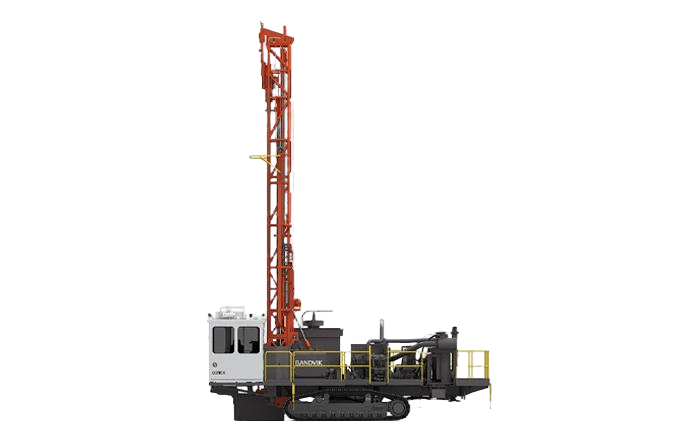
D245X Rotary Blasthole Drilling Rig
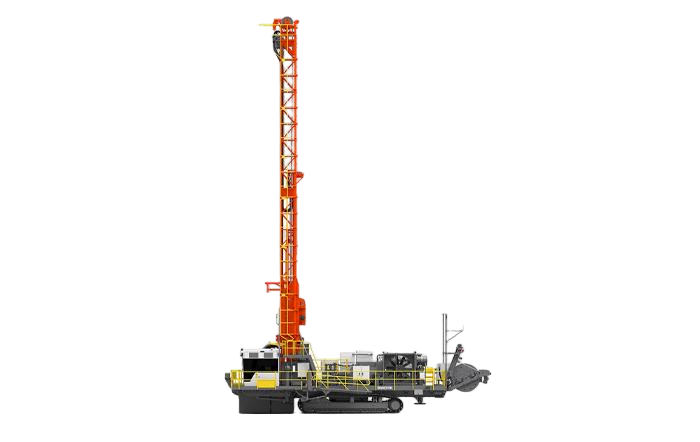
DR412iE Rotary Blasthole Drilling Rig
We are dedicated to building a better future with you through meticulous and professional service!