

- Home
- Products +
- About Us +
- Projects
- Application +
- News +
- Contact Us
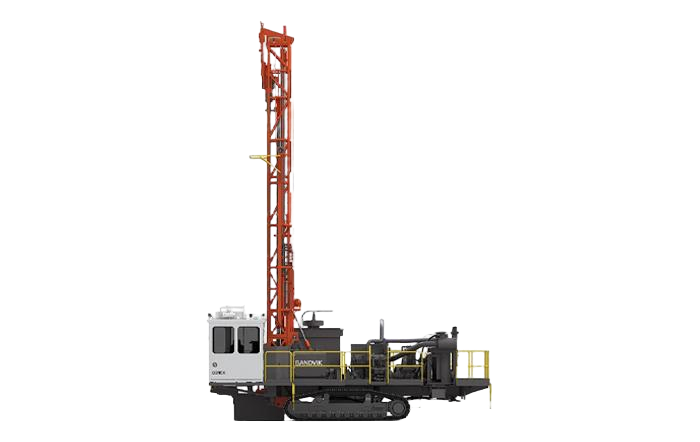


The Sandvik D245X is a diesel-powered, self-propelled drilling rig designed for use in large quarries and for low-pressure rotary drilling in metal mines. Its transportability makes it the preferred choice of equipment for mining contractors.
Product Features
The D245X is a diesel-powered, self-propelled low-pressure rotary blasthole drill designed for large quarries and metal mines. As one of the low-pressure rotary drilling rigs for surface mining, it combines rotary drilling technology, compressed-air hole cleaning and a crawler-mounted platform to support demanding production drilling operations.
The D245X is engineered for low-pressure rotary blasthole drilling, where the drill bit breaks rock through continuous rotation and axial loading. Compressed air is used primarily to remove rock cuttings from the borehole, helping maintain an effective drilling process.
Unlike down-the-hole hammer drilling, which uses high-pressure compressed air to power an impact hammer near the drill bit, low-pressure rotary drilling relies on rotary torque and bit loading as its primary rock-breaking mechanism.
This drilling method is suitable for mining projects where the required blast-hole diameter, drilling depth, geological conditions and production plan match the capabilities of a rotary drilling system.
For mining contractors, selecting the appropriate low-pressure rotary drilling rig means evaluating the complete drilling process, including bit loading, rotary performance, hole cleaning and drill pipe handling.
The D245X integrates its diesel power system with an air compressor to support continuous rotary drilling and effective borehole cleaning.
The engine and compressor work together to maintain the operating conditions required for rock cutting and cuttings removal. Compressor control, load sensing and fan-speed management help optimize machine operation under different working conditions.
For mining operators, proper coordination between the power system and compressor is important for maintaining stable drilling performance and controlling unnecessary energy consumption.
Drill pipe handling and machine relocation both influence the total drilling cycle in surface mining operations.
The D245X incorporates a drilling platform and pipe-handling system designed to support production drilling. Improved pipe handling and faster tramming can help reduce non-drilling time between holes and positioning operations.
Its crawler-mounted, self-propelled design also supports equipment movement around large quarry and metal mine sites.
These features are particularly relevant for mining contractors who need to coordinate multiple drilling positions within a production bench.
Mining projects do not always require vertical blast holes. Depending on the blasting design and site layout, angled drilling may be necessary.
The D245X can be equipped with an optional angle-drilling configuration. According to the manufacturer's technical documentation, the standard mast angle range for this option is 0–30°, adjustable in 5° increments.
This configuration provides additional flexibility for projects with specific blast-hole positioning requirements.
Buyers should confirm the angle-drilling option and applicable mast configuration when specifying equipment.
A drilling rig operating in an open-pit mine must withstand repeated mechanical loads and frequent movement across uneven working surfaces.
The D245X uses a heavy-duty frame, crawler undercarriage and reinforced drilling structure to support its operating requirements.
The combination of structural strength and crawler mobility helps mining contractors position the equipment across different drilling locations.
For long-term operation, the condition of the undercarriage, drilling mast, feed system and structural connections should be included in routine equipment inspections.
Equipment maintenance accessibility directly affects the time required for routine inspections and servicing.
The D245X features an open work platform and an in-line engine arrangement. This layout provides more accessible service areas for maintenance personnel and simplifies access to key machine components.
Regular inspection of the engine, hydraulic system, compressor, filters and lubrication points helps identify potential problems before they develop into unexpected equipment downtime.
For remote mining projects, accessible maintenance points can make daily service procedures easier to organize.
Operator visibility, control accessibility and working comfort are important considerations for drilling equipment used during extended production shifts.
The D245X features an ergonomically designed operator cabin with large windows for improved visibility of the surrounding work area.
Its integrated electro-hydraulic controls simplify machine operation, while clearly identified control functions help operators manage drilling activities.
Additional features include standard LED exterior lighting and dual-channel emergency stop buttons, supporting visibility and emergency response requirements during equipment operation.
Parameters
|
Hole Diameter |
127.00 - 203.00 mm (5.00 - 8.00 inch) |
|
Bit Weight |
21,319 kg (47,000 lb) |
|
First pass hole depth |
8.66 m (28.50 ft) |
|
Drilling Type |
Rotary Drilling |
|
Max. hole depth |
27.00 m (88.50 ft) |
|
Axial compressive force |
185 kN (41,500 lb) |
|
Air Compressor |
29.7 m3/min@ 6.9 bar (1,050 CFM @ 100 psi) |
The D245X is primarily designed for large quarries and metal mines that use low-pressure rotary drilling for production blast holes.
In open-pit metal mines, production drilling is an important stage in the drilling and blasting cycle.
The D245X can be considered for projects involving:
Iron ore mining
Copper mining
Gold mining
Other metal ore extraction operations
Its application should be evaluated according to the planned blast-hole dimensions, bench configuration, rock formation and daily drilling requirements.
Quarries producing construction aggregates and industrial minerals require regular drilling before blasting and rock extraction.
The D245X is designed for large quarry operations where low-pressure rotary drilling is compatible with the production plan.
Factors such as rock abrasiveness, bench height, blast-hole spacing and required drilling volume should be assessed before selecting the equipment.
Low-pressure rotary drilling and down-the-hole (DTH) drilling use different rock-breaking mechanisms. Understanding the difference helps buyers choose equipment that matches their geological conditions and drilling objectives.
In a low-pressure rotary drilling system, the drill bit breaks rock through continuous rotation and applied axial force.
Compressed air is primarily used to remove cuttings from the borehole. The drilling system is therefore designed around rotary torque, bit loading, airflow and hole-cleaning performance.
DTH drilling uses a pneumatic hammer positioned close to the drill bit. High-pressure compressed air powers the hammer, generating repeated impact energy to break the rock.
The two methods should not be treated as interchangeable. Buyers should evaluate the required drilling diameter, hole depth, rock characteristics and drilling productivity before selecting the appropriate system.
For projects requiring a different drilling method, explore our surface down-the-hole drilling rig.
Before selecting a D245X low-pressure rotary drilling rig, buyers should evaluate whether its drilling method and operating configuration match their production requirements.
Consider the following factors:
Confirm the required hole diameter, drilling depth, bench height and blasting pattern. These factors determine whether the D245X's drilling capacity matches the project design.
Rock hardness, abrasiveness and geological consistency influence bit selection, penetration performance and drilling tool consumption.
The drilling bit and operating configuration should be selected according to the actual rock formation rather than relying on a general equipment specification.
Confirm that the project requires low-pressure rotary drilling rather than high-pressure DTH hammer drilling.
The drilling method should be determined before selecting the rig to avoid purchasing equipment that does not match the intended production process.
Evaluate the mine layout, ground conditions, transportation requirements, maintenance facilities and operating environment.
These factors help determine whether the D245X's crawler-mounted diesel configuration is suitable for the intended worksite.
Maintaining consistent drilling performance requires attention to both the machine and its drilling consumables.
For the D245X, maintenance planning should cover several key areas:
Engine and compressor: Check operating condition, filters, cooling systems and air delivery performance.
Hydraulic system: Inspect hoses, connections, fluid condition and hydraulic components.
Drill pipe handling system: Check mechanical connections and moving components for abnormal wear.
Rotary head and drilling components: Inspect rotating parts, lubrication points and relevant connections.
Crawler undercarriage: Monitor track condition, wear and structural connections.
Drilling tools: Inspect drill bits and replace worn components according to operating requirements.
The serviceability of the open work platform and in-line engine layout helps maintenance personnel access key areas during routine inspections.
Selecting compatible rotary drilling tools and maintaining an appropriate inventory of drilling rig spare parts can also help reduce interruptions during mining operations.
Beijing Haichuang Unite Technology Co., Ltd. supplies mining machinery, drilling rigs, drilling tools and equipment components for mining contractors and industrial customers.
When sourcing a D245X low-pressure rotary drilling rig, buyers need more than a product specification. They also need to confirm the equipment configuration, supply scope, technical documentation, parts availability and delivery arrangements.
HCLH provides support for equipment selection and mining machinery procurement, helping customers evaluate product requirements before placing an order.
Our equipment supply capabilities include:
Mining drilling equipment sourcing
Technical consultation before purchasing
Drilling tools and related component supply
Spare parts procurement support
Pre-sales and after-sales technical assistance
For additional information about our mining equipment capabilities, visit our mining equipment solutions.

FAQ
Do you provide technical support?
Yes. We provide professional pre-sales, in-sales, and after-sales support, along with expert technical guidance and usage precautions.
Sales Coverage
We supply specialized products to customers worldwide.
Do you provide technical support?
Yes. We provide professional pre-sales, in-sales, and after-sales support, along with expert technical guidance and usage precautions.
Warranty Policy
We provide repair service if there is necessary
Payment Methods
30% advance payment,70% balance payment before shipment
Latest Products
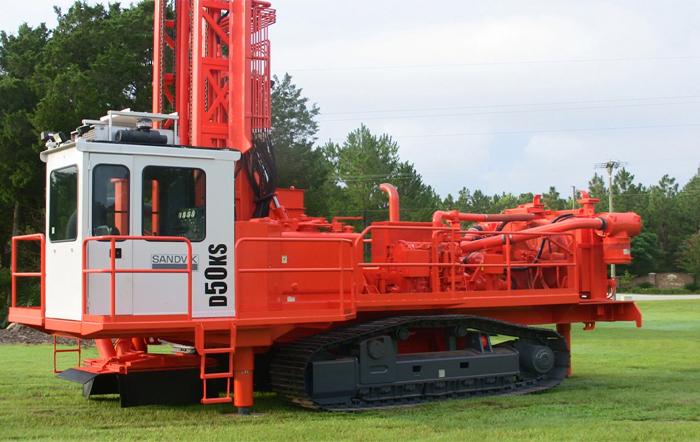
D50KS Rotary Blasthole Drilling Rig
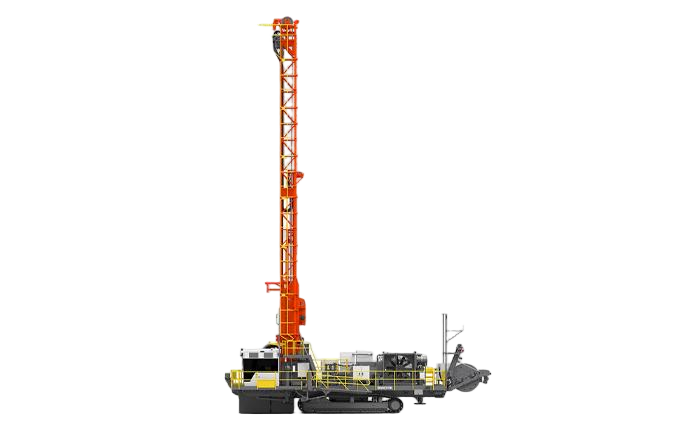
DR412iE Rotary Blasthole Drilling Rig
We are dedicated to building a better future with you through meticulous and professional service!