
- Home
- Products +
- About Us +
- Projects
- Application +
- News +
- Contact Us
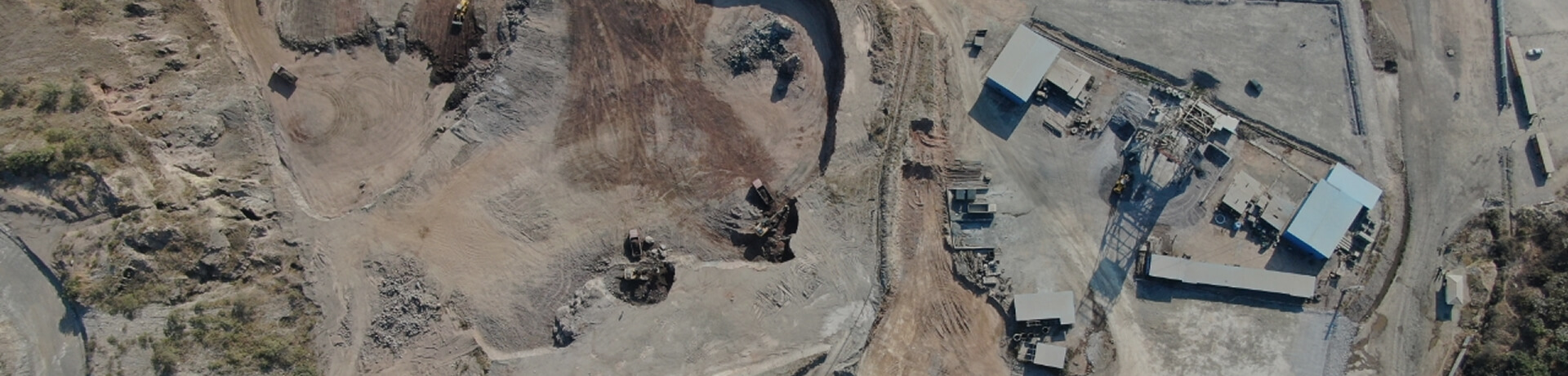
Top-hammer drilling tools are used to drill holes in rock for blasting, excavation, tunneling, mining, quarrying and civil construction. They form the consumable drill string that transfers impact energy, rotation and feed force from a top-hammer rock drill to the rock face.
Unlike down-the-hole drilling, where the hammer operates near the bottom of the hole, a top-hammer system places the rock drill outside the hole. Impact energy travels through the shank adapter, coupling sleeves and drill rods before reaching the drill bit.
This drilling method is valued for its mobility, relatively fast setup and ability to drill a wide range of small- and medium-diameter holes. It is widely used in surface and underground operations, including quarry benches, mine development headings, tunnel faces, road cuts, foundation excavation and production blast holes.
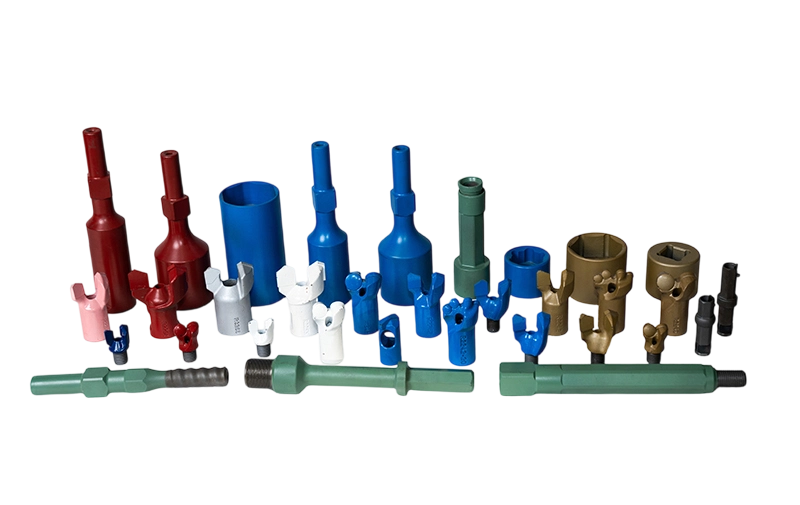
A complete top-hammer drill string typically includes:
Shank adapter
Coupling sleeves
Extension rods or male-female rods
Guide rods or tube rods
Button bits
Reaming bits
Thread lubricants and drilling accessories
The correct combination depends on the rock formation, hole diameter, drilling depth, rock-drill power and required hole straightness.
In a top-hammer drilling system, the rock drill generates repeated impact blows at the top of the drill string. Each impact creates a stress wave that travels through the shank adapter, drill rods and coupling connections to the drill bit.
At the same time:
Rotation moves the carbide buttons to a new cutting position.
Feed force keeps the drill bit in contact with the rock.
Air or water flushing removes broken rock from the hole.
Carbide buttons crush and fracture the rock face.
Efficient energy transmission through the drill string is important because energy losses at worn threads, loose couplings or poorly matched components can reduce penetration and increase tool wear. Sandvik describes top-hammer tools as systems designed to transmit intensive impact power into the rock while minimizing energy loss.
One of the most common uses of top-hammer drilling tools is drilling blast holes in stone and aggregate quarries.
Before a quarry bench is blasted, a drilling rig produces a planned pattern of holes. Explosives are placed in these holes to fragment the rock into sizes that can be loaded, crushed and processed.
Top-hammer tools used in quarry bench drilling may include:
Shank adapters matched to the rock drill
T38, T45, T51 or larger thread systems
Extension rods or male-female rods
Standard or retrac button bits
Guide rods for improved hole straightness
This method is commonly applied in:
Granite quarries
Limestone quarries
Basalt quarries
Marble quarries
Sandstone extraction
Construction aggregate production
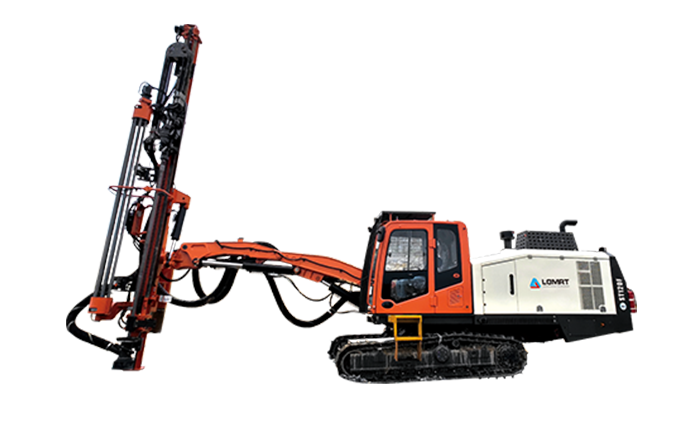
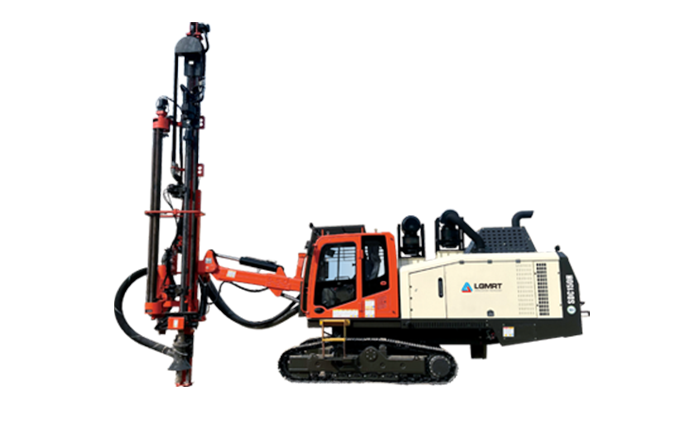
Top-hammer surface rigs are designed for quarry production and related excavation work. For example, Sandvik identifies quarry production drilling as a typical application for its surface top-hammer equipment and heavy-duty bits.
For quarry buyers, the primary tool-selection concerns normally include:
Penetration rate
Gauge-button wear
Hole deviation
Thread life
Meters drilled per bit
Cost per drilled meter
Availability of replacement rods and couplings
The fastest bit is not necessarily the most economical. A slightly slower bit may provide a lower cost per meter when it retains its diameter longer and requires fewer changes.
Top-hammer drilling tools are also used for blast-hole drilling in small and medium-sized open-pit mines.
Applications include:
Production blast holes
Pre-split holes
Buffer holes
Trim blasting
Wall-control drilling
Secondary breaking holes
Production holes are drilled in patterns based on burden, spacing, bench height, explosive type and rock characteristics. Hole accuracy affects fragmentation, blasting efficiency and the condition of the final pit wall.
Top-hammer systems are particularly useful when the operation requires:
High rig mobility
Fast movement between drilling locations
Small or medium blast-hole diameters
Flexible drilling angles
Frequent pattern changes
Accurate collaring
Boart Longyear describes its surface top-hammer tooling as a solution for percussive production, drill-and-blast and surface mining applications.
For mine operators, a complete evaluation should include the performance of the whole drill string rather than the drill bit alone. Poorly matched rods, couplings or shank adapters can reduce energy transfer even when the bit design is suitable.
In underground mining, top-hammer drilling tools are extensively used to create headings, drifts, crosscuts, declines and access tunnels.
A development drill rig drills a pattern of holes into the working face. These holes can include:
Cut holes
Stoping holes
Contour holes
Lifters
Production holes
Relief holes
Reamed holes
After the holes are charged and blasted, the broken rock is removed and the cycle is repeated.
Underground development places high demands on the drill string because tools operate in restricted spaces and may experience:
High bending loads
Frequent rod changes
Water and corrosive mine conditions
Broken or variable rock
Difficult drilling angles
Increased risk of rod jamming
Limited access for tool recovery
Male shank adapters and suitable underground drill-string configurations are commonly used where tunneling and drifting produce high bending stresses.
Reliable tool performance is especially important underground because a broken rod or damaged thread can interrupt the entire drilling cycle. Longer tool life can therefore provide value beyond the cost of the individual component.
Top-hammer drilling tools are widely used in drill-and-blast tunneling for transportation, utilities, hydropower and underground infrastructure.
Typical projects include:
Road tunnels
Railway tunnels
Metro tunnels
Water-conveyance tunnels
Hydropower tunnels
Utility tunnels
Underground storage caverns
Mine access tunnels
Top-hammer tools can be used for selected underground production-drilling methods where rings or fans of blast holes are drilled into the orebody.
Applications can include:
Fan drilling
Ring drilling
Long-hole stoping
Slot drilling
Production blasting
Cable and communication holes
Drainage holes
The required tool system depends heavily on hole depth. As the drill string becomes longer, maintaining energy transfer and hole straightness becomes more difficult.
Suitable systems may use:
Male-female rods
Tube rods
Guide tubes
Stronger thread connections
Retrac button bits
Automated bit-changing systems
Boart Longyear identifies underground fan holes, ring-drilled blast holes and certain drainage or communication holes among the applications for its drifter-style equipment.
For deeper production holes, buyers should pay particular attention to rod stiffness, thread condition, flushing capacity and the acceptable deviation at the bottom of the hole.
Top-hammer drilling is frequently used to remove rock during road, railway and general infrastructure construction.
Typical uses include:
Road cuts
Highway widening
Railway cuttings
Rock trenching
Pipeline routes
Site preparation
Bridge foundation excavation
Slope excavation
Controlled blasting near structures
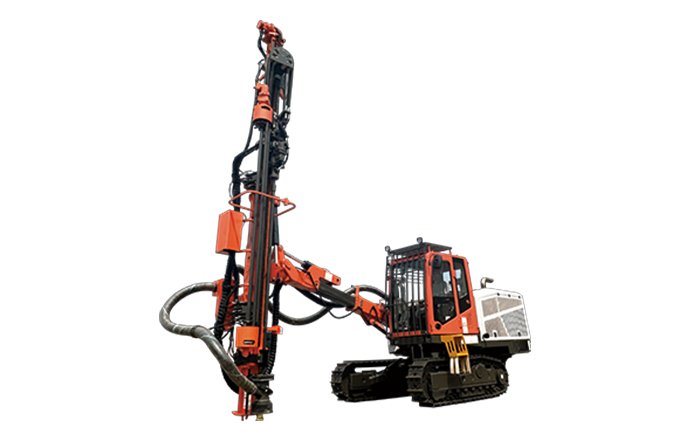
Surface top-hammer rigs are mobile and can drill vertical, inclined or horizontal holes depending on the feed arrangement. This flexibility makes them suitable for construction sites where drilling locations and angles change frequently.
Road cutting, pipeline drilling and foundation drilling are among the typical applications listed for surface top-hammer drill rigs.
In populated or environmentally sensitive areas, contractors may use carefully controlled blast patterns, pre-splitting and smaller charges to limit vibration and overbreak.
Pre-splitting is a drilling and blasting technique used to create a controlled fracture plane before the main production blast.
A row of closely spaced holes is drilled along the desired final wall. These holes are lightly charged and fired to create a crack between them.
Top-hammer tools used for pre-splitting must provide:
Accurate collar placement
Consistent hole angle
Limited deviation
Reliable hole diameter
Stable performance across the full drilling depth
Pre-splitting is commonly used for:
Quarry final walls
Open-pit mine slopes
Road cuts
Dam foundations
Building excavations
Tunnel portals
Boart Longyear identifies quarry benching and pre-splitting holes as surface applications for its rock-drilling equipment.
The lowest-priced tool may create higher overall costs if excessive hole deviation damages the final wall or requires additional scaling and stabilization.
Top-hammer drilling tools can be used to prepare holes for selected foundation and ground-support applications.
These can include:
Rock-anchor holes
Rock-bolt holes
Slope-stabilization holes
Foundation excavation holes
Grouting holes
Retaining-wall construction
Hydropower foundation preparation
The exact drilling method depends on hole depth, diameter, overburden conditions and whether casing is required. Top-hammer drilling is most suitable when the hole is primarily drilled in competent rock and the selected drill string can maintain the required direction.
For anchoring work, hole straightness and diameter consistency can be more important than maximum penetration because the installed anchor or bolt must fit the design specification.
Handheld or mechanized top-hammer tools can also be used for secondary rock breaking and scaling.
Secondary breaking involves reducing oversized rock that cannot be loaded, transported or fed into a crusher. Holes may be drilled into the boulder before controlled blasting or splitting.
Typical applications include:
Breaking oversized quarry rock
Removing isolated rock blocks
Scaling unstable tunnel surfaces
Correcting overbreak
Removing foundation obstructions
Preparing rock for mechanical splitting
Smaller tapered or threaded top-hammer tools may be selected for these jobs because the holes are usually shallower and smaller than production blast holes.
Top-hammer reaming tools are used to enlarge an existing pilot hole.
The operation normally involves:
Drilling a smaller pilot hole.
Inserting an integral reaming bit or pilot-adapter assembly.
Enlarging the hole to the required final diameter.
Reaming is commonly used for:
Tunnel burn-cut holes
Large relief holes
Service openings
Drainage holes
Cable passages
Pipeline holes
Ventilation openings
Larger relief holes are particularly important in tunnel cut patterns because they provide expansion space for rock broken by the first charged holes.
Top-hammer tool systems can include reaming bits from relatively small diameters to considerably larger sizes. Published systems include conventional threaded button bits from approximately 28 to 152 mm, while specialized large top-hammer systems can drill holes up to approximately 178 mm and use still larger reaming tools.
Top-hammer drilling tools may be used to create holes for services in mines, tunnels and construction projects.
Applications include:
Mine-water drainage
Tunnel drainage
Electrical cables
Communication lines
Water pipelines
Compressed-air lines
Instrumentation
Small ventilation passages
The holes may be horizontal, inclined upward or inclined downward. Hole direction influences flushing requirements because cuttings behave differently in each orientation.
For upward holes, the flushing system must prevent cuttings from falling back onto the bit. For downward holes, water and cuttings may collect around the cutting face unless they are removed effectively.
Top-hammer drilling tools are used in some dimensional-stone quarries to create rows of holes for block separation.
Applications may include:
Granite block extraction
Marble quarry preparation
Stone splitting
Line drilling
Controlled perimeter drilling
In these operations, accurate hole spacing and direction are important because the goal is to separate a saleable block with minimal damage.
The drilling tools may need to produce:
Straight holes
Consistent diameter
Clean collaring
Minimal cracking outside the desired line
Repeatable depth
Smaller drill diameters and closely spaced holes are common in line-drilling and splitting operations.
Top-hammer drilling tools are not limited to the drill bit. They include all consumable components between the rock drill and the rock face.
The shank adapter connects the rock drill to the drill string. It receives impact energy directly from the piston and transfers it to the rods.
The correct shank adapter must match:
Rock-drill model
Thread system
Flushing arrangement
Required length
Drilling application
A coupling sleeve joins two male-threaded components. It helps transmit impact and rotation between rods.
Common designs include:
Full-bridge couplings
Semi-bridge couplings
Crossover couplings
Adapter couplings
The thread fit must be controlled because excessive clearance can increase energy loss, heat, vibration and hole deviation.
The drill rod transmits impact energy, rotation and flushing media.
Available rod types include:
Extension rods
Male-female rods
Drifter rods
Guide rods
Tube rods
Speed rods
Round rods
Hexagonal rods
Top-hammer rods are produced in different configurations to support energy transfer, hole straightness and service life.
The button bit contacts the rock. Tungsten-carbide buttons crush the formation under repeated impact.
Bit options include:
Flat-face bits
Drop-center bits
Concave bits
Retrac bits
Heavy-duty bits
Reaming bits
Button profiles can include spherical, semi-ballistic and conical designs, while skirts may be regular or retrac depending on the rock and drilling conditions.
Top-hammer drilling is generally suitable when a project requires:
Small- to medium-diameter rock holes
Rapid rig movement
Flexible drilling angles
High penetration in shallow or moderate-depth holes
Accurate collar positioning
Production or development blast holes
Surface or underground mobility
Easy access to consumable tools
It is particularly effective for quarry benches, underground headings, tunnel faces, road cuts and medium-diameter surface production holes.
Top-hammer drilling is not the best method for every hole.
As hole depth increases, impact energy must travel through more rod connections. Energy loss, thread wear and hole deviation can become more difficult to control.
A down-the-hole system may be considered when deep, straight holes are the main requirement.
Large mining blast holes may be better suited to rotary or DTH drilling, depending on the formation and required diameter.
Specialized top-hammer systems have expanded the available diameter range. For example, Sandvik’s LT90 system is designed for blast holes from 140 to 178 mm, but such large top-hammer applications require compatible high-power equipment and purpose-designed tools.
Loose soil, gravel and unstable overburden may require casing, simultaneous drilling systems or other methods designed to support the hole wall.
The performance of top-hammer drilling tools should be measured using operational data rather than purchase price alone.
Important indicators include:
Penetration rate
Meters drilled per bit
Meters between regrinding
Rod service life
Coupling service life
Thread wear
Gauge-diameter retention
Hole deviation
Tool-change frequency
Drill-rig downtime
Cost per meter
Maintaining sharp carbide buttons is important because a sharp bit transfers percussive energy to the rock more effectively and supports higher penetration under the same drilling parameters.
A field trial should compare several tools under similar rock, rig and operating conditions. One unusually successful or unsuccessful bit is not sufficient to evaluate batch performance.
They are mainly used in mining, quarrying, tunneling, civil construction, road building, dimensional-stone extraction and underground infrastructure projects.
Yes. Different top-hammer systems are designed for surface production, underground development, tunneling, long-hole production and handheld drilling applications.
The available diameter depends on the rock drill, thread system and tool family. Conventional threaded button bits cover a broad small- and medium-diameter range, while specialized high-power top-hammer systems can drill substantially larger blast holes.
No. Although blast-hole drilling is a major application, top-hammer tools are also used for drainage, utility passages, anchoring, grouting, controlled excavation, reaming and secondary rock breaking.
The shank adapter connects directly to the rock drill. The drill rod extends the drill string and transfers energy from the shank adapter or coupling to the bit.
Coupling sleeves connect male-threaded rods and other drill-string components. They allow the hole to be extended by adding additional rods.
Hard and abrasive rock commonly requires durable spherical carbide buttons, a strong bit body and suitable gauge protection. However, the final design should also consider fracture conditions, silica content and the available rock-drill power.
Tool life can be improved by matching the drill string to the rock drill, maintaining correct feed and rotation settings, using effective flushing, inspecting thread wear and regrinding carbide buttons before they become excessively flat.
Top-hammer drilling tools are used wherever efficient rock drilling is needed for blasting, excavation or underground development. Their main applications include quarry benching, open-pit production, underground mine development, tunnel-face drilling, road excavation, pre-splitting, foundation work, reaming and service-hole construction.
The performance of the system depends on more than the button bit. The shank adapter, coupling sleeves, drill rods, bit design, carbide profile and flushing arrangement must work as a complete drill string.
For purchasing teams, the most effective selection process is to provide the supplier with the rock-drill model, thread system, hole diameter, hole depth, rock condition, flushing method and current wear data. The recommended tools should then be evaluated according to penetration, service life, hole quality and total drilling cost per meter—not unit price alone.

We are dedicated to building a better future with you through meticulous and professional service!