
- Home
- Products +
- About Us +
- Projects
- Application +
- News +
- Contact Us
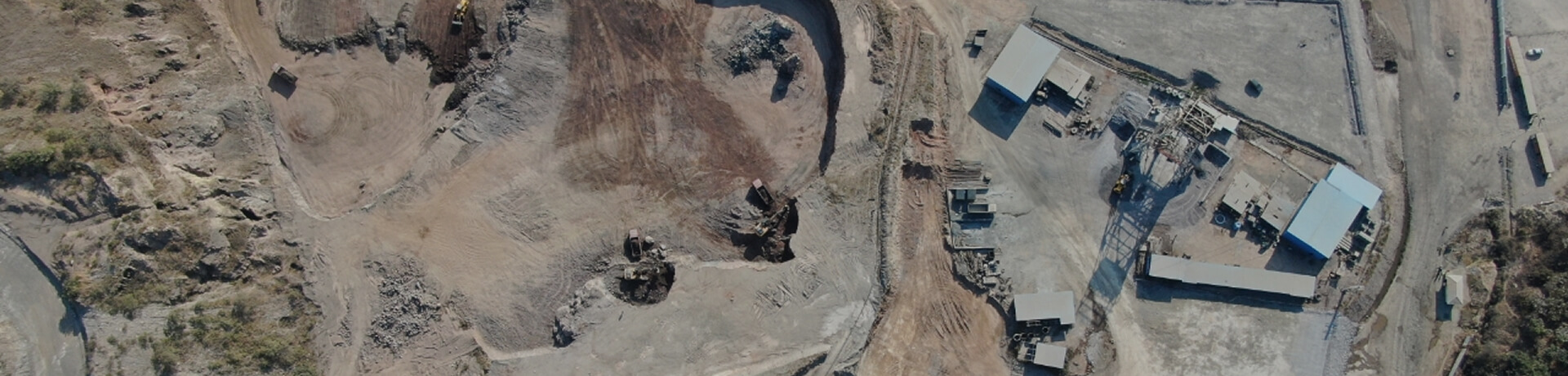
As a Drilling Rigs Supplier, Haichuang Unite understands that choosing between top-hammer and down-the-hole drilling is not simply a matter of comparing drill depth or purchase price. Mining contractors, quarry operators, and project managers need to match the drilling method with rock conditions, hole diameter, production targets, fuel or battery access, operator skill, and long-term maintenance capacity.
This comparison addresses the questions commonly found in the leading English-language search results for this topic. Buyers typically want to know how the two systems perform in hard rock, how quickly they drill, how stable the hole remains, what the real operating costs are, and which rig will create the fewest problems on site.
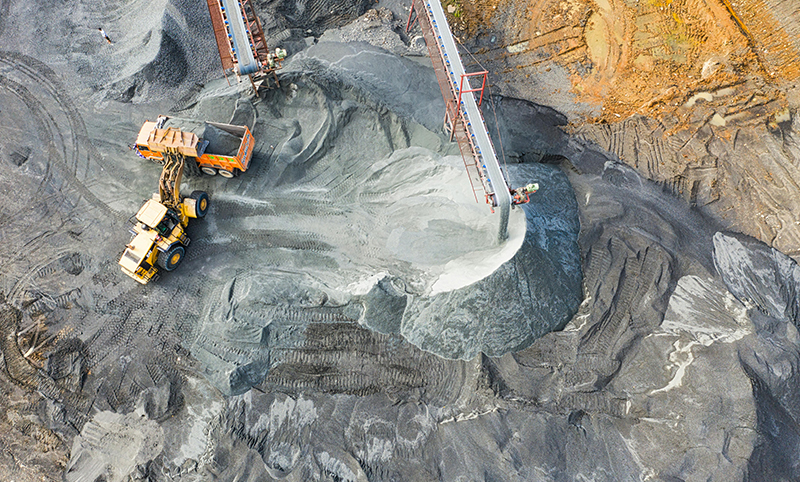
A top-hammer rig places the percussion mechanism at the rear of the drill string. The hammer strikes the drill rod, and the impact energy travels through the rods to the bit at the bottom of the hole.
Top-hammer drilling is often selected for quarrying, bench drilling, construction blasting, secondary breaking, and shallow to medium-depth production holes where mobility and fast cycle times are important.
A down-the-hole rig sends compressed air through the drill pipe to power a pneumatic hammer positioned at the bottom of the hole. The hammer strikes the bit directly against the rock, so impact energy does not need to travel through the full length of the drill string.
DTH drilling is commonly used for deep blast holes, water wells, geotechnical work, large-diameter holes, foundation drilling, and hard-rock mining where accuracy and bottom-hole energy are more important than compact size.
The following values are general working ranges rather than guaranteed specifications. Actual performance depends on rock strength, bit design, hole diameter, drill angle, compressor output, rod quality, operator technique, and equipment condition.
| Parameter | Top-hammer drilling rig | Down-the-hole drilling rig | Purchasing implication |
|---|---|---|---|
| Primary impact location | At the top of the drill string | Inside the hole, directly above the bit | DTH generally retains impact efficiency better in deep holes |
| Common hole diameter | Approximately 38 to 127 mm | Approximately 90 to 305 mm or more | DTH is usually more suitable for large blast holes |
| Typical productive depth | Approximately 5 to 30 m, depending on rig and rock | Approximately 10 to 60 m or more, depending on compressor and drill pipe | DTH becomes more attractive as depth increases |
| Shallow-hole drilling speed | Often high | Moderate to high | Top hammer can reduce cycle time in shallow bench work |
| Deep-hole energy efficiency | Decreases as rod length increases | Usually more consistent | DTH can deliver more predictable deep-hole performance |
| Hole straightness | Good in suitable formations, but more sensitive to rod deflection | Generally very good in deep, hard formations | DTH reduces deviation risk for deep blasting and drilling |
| Large-diameter capability | Limited on many compact models | Strong capability with suitable hammer and compressor | DTH is often preferred for high-volume explosive columns |
| Air requirement | Lower external air demand on many hydraulic systems | High compressor demand | Check fuel, compressor, and cooling costs before selecting DTH |
| Rig size and mobility | Often compact and highly maneuverable | Usually heavier because of the compressor and drill pipe | Top hammer can be easier to transport in restricted areas |
| Rod handling | Usually simpler and lighter | Heavier pipe and additional hammer components | DTH may require stronger handling equipment and more lifting space |
| Noise and vibration | High surface vibration near the hammer | Lower surface impact transmission but high compressor noise | Evaluate worker exposure and nearby community restrictions |
| Typical maintenance focus | Percussion unit, shank adapter, rods, couplings, and flushing system | DTH hammer, bit, compressor, drill pipe, seals, and flushing system | Local parts and technician availability can change total cost significantly |
Maximum drilling depth and maximum hole diameter are not production guarantees. A rig rated for a certain depth may drill much more slowly at that depth, especially in fractured rock or when the compressor cannot maintain the required pressure and airflow.
This approach prevents a common purchasing mistake: selecting the rig with the highest advertised power while overlooking access, maintenance, and operating cost.
Top-hammer rigs often provide a fast drilling cycle when the hole is relatively shallow and the rock is competent. The hammer responds quickly, rod changes can be efficient, and the rig can move rapidly between holes.
In a quarry bench with consistent rock and moderate hole depth, operators may experience strong hourly production. The compact layout also makes it easier to position the rig close to the bench face and adjust the boom between holes.
However, performance can decline when the drill string becomes long. Energy losses at rod joints, rod bending, hole cleaning problems, and unstable formations may reduce penetration speed and increase the need to redrill or correct deviated holes.
DTH drilling usually becomes more competitive when the project requires deeper holes, larger diameters, or strict hole alignment. Because the hammer works at the bottom, the bit receives more consistent impact energy even when the hole is long.
Actual site experience commonly shows that DTH rigs maintain a steadier penetration rate in hard, deep formations than top-hammer systems. The result can be more predictable burden and spacing, more uniform explosive distribution, and less secondary breaking after blasting.
The tradeoff is that DTH production depends heavily on compressor performance. If air pressure drops, airflow is insufficient, or moisture and dust control are poor, penetration can slow quickly and the hammer can suffer premature wear.
A faster drill is not always the more productive choice. A hole that deviates from its planned position can cause uneven fragmentation, excessive oversize, backbreak, flyrock risk, or poor control of the final wall.
Not every top-hammer or DTH rig is battery powered. Many mining rigs use diesel-hydraulic systems, while newer models may use electric, battery-electric, or hybrid power. Therefore, battery life should be evaluated from the complete machine specification rather than assumed from the drilling method.
For a battery-electric rig, practical endurance depends on:
In real work, continuous drilling time is usually shorter than the theoretical battery calculation because the rig also spends energy on positioning, leveling, rod handling, dust suppression, lighting, and movement. Buyers should request a measured shift result under comparable rock conditions, not only a laboratory endurance figure.
DTH rigs require substantial compressed air to operate the down-hole hammer and remove cuttings. The compressor may consume a large share of the machine's fuel, especially when drilling large holes or working at high altitude.
Top-hammer rigs can have lower air demand and may consume less fuel in shallow drilling. However, a top-hammer rig can lose this advantage if it requires slower drilling, more corrective holes, or frequent rod replacement in deep formations.
A practical operating-cost calculation should include:
Rig stability is determined by the undercarriage, crawler width, leveling system, mast design, boom reach, center of gravity, and drilling angle. A powerful rig can still perform poorly if it shifts on a rough bench or requires repeated repositioning.
Top-hammer rigs are often easier to stabilize in narrow or irregular work areas because of their compact structure. DTH rigs may provide excellent stability on prepared benches but require more space because of their compressor, longer drill pipe, and larger operating envelope.
During a site demonstration, observe whether the rig:
Operators often notice differences that are not visible in a brochure. Controls should be easy to understand, rod changes should not require excessive manual handling, and the cabin or control station should protect the operator from dust, vibration, and noise.
Top-hammer rigs may feel more responsive during rapid positioning and shallow drilling. DTH rigs may require more attention to compressor pressure, air temperature, lubrication, hammer condition, and flushing performance. A machine that is slightly slower but easier to control can deliver better production over a full shift.
Top hammer is particularly attractive when the project has consistent rock, shallow hole designs, and frequent movement between drilling positions.
DTH is usually the stronger choice when the hole design is deep, the rock is hard, the diameter is large, and the project can support compressor fuel, maintenance, and spare-parts requirements.
Some contractors operate both systems because the geology and hole design change from one work area to another. A top-hammer rig can handle shallow production holes and restricted access, while a DTH rig can handle deeper or larger holes.
A mixed fleet may be justified when:
A lower purchase price can become expensive if the rig uses more bits, consumes more fuel per meter, or requires frequent service interruptions. Conversely, a higher-priced DTH rig may be economical if it reduces drilling time and improves blasting results in deep holes.
Estimate the total cost over the expected service period:
Buyers should request a cost-per-meter estimate based on the actual rock and hole design. The calculation should include productive drilling time and nonproductive time, such as moving, leveling, rod changes, bit changes, air-system maintenance, and clearing blocked holes.
A useful field trial report should record:
This evidence gives purchasing teams a clearer basis for comparison than a single hourly drilling-speed claim.
Drilling equipment operates in harsh conditions, and wear components eventually need replacement. The availability of drill bits, rods, couplings, shank adapters, DTH hammers, seals, filters, hydraulic parts, and compressor components may be more important than a small difference in purchase price.
Ask the supplier to confirm:
Top-hammer maintenance usually focuses on the hydraulic percussion unit, lubrication, shank adapter, rod threads, couplings, feed system, and flushing equipment. Incorrect feed pressure or poor lubrication can damage both the hammer and the drill string.
DTH maintenance requires careful control of compressor air quality, lubrication rate, hammer seals, piston wear, bit condition, drill pipe threads, and flushing performance. Water, dust, and insufficient oil can shorten hammer life and increase repair costs.
In either system, preventive maintenance is more economical than waiting for a major failure at the drilling face.
| Project condition | Preferred starting option | Reason |
|---|---|---|
| Shallow holes and frequent relocation | Top hammer | Compact layout and fast positioning |
| Deep holes in hard rock | DTH | Stable bottom-hole impact energy |
| Large-diameter blast holes | DTH | Better compatibility with large bits and air flushing |
| Restricted access and narrow benches | Top hammer | Lower machine size and simpler movement |
| Strict hole deviation limits | DTH | Generally stronger deep-hole alignment |
| Limited compressor or fuel capacity | Top hammer | Lower air-system burden in many applications |
| Mixed geology and mixed hole designs | Field trial or combined fleet | One drilling method may not be optimal everywhere |
Select a top-hammer drilling rig when the project mainly involves shallow or medium-depth holes, compact work areas, rapid relocation, moderate diameters, and limited compressor capacity. It can provide a strong balance of drilling speed, maneuverability, and operating simplicity.
Select a DTH drilling rig when the project requires deep holes, large diameters, hard-rock penetration, reliable hole alignment, and consistent blasting results. It is especially suitable when the site can support the compressor, fuel, tooling, and maintenance requirements.
The best decision should come from a documented field comparison using the same rock, hole diameter, drilling depth, and production target. A Drilling Rigs Supplier should be able to explain not only how the rig drills, but also how it performs across a complete shift and how quickly the support team can restore production after wear or failure.
Haichuang Unite can help purchasing teams compare rig configuration, drilling parameters, tooling, power systems, stability, and service requirements before final selection. For mining contractors and quarry operators, the right drilling method is the one that delivers the lowest reliable cost per drilled meter while meeting safety, accuracy, and production objectives. As a Drilling Rigs Supplier, Haichuang Unite recommends evaluating the full operating environment before choosing top hammer, DTH, or a combination of both.
We are dedicated to building a better future with you through meticulous and professional service!