
- Home
- Products +
- About Us +
- Projects
- Application +
- News +
- Contact Us
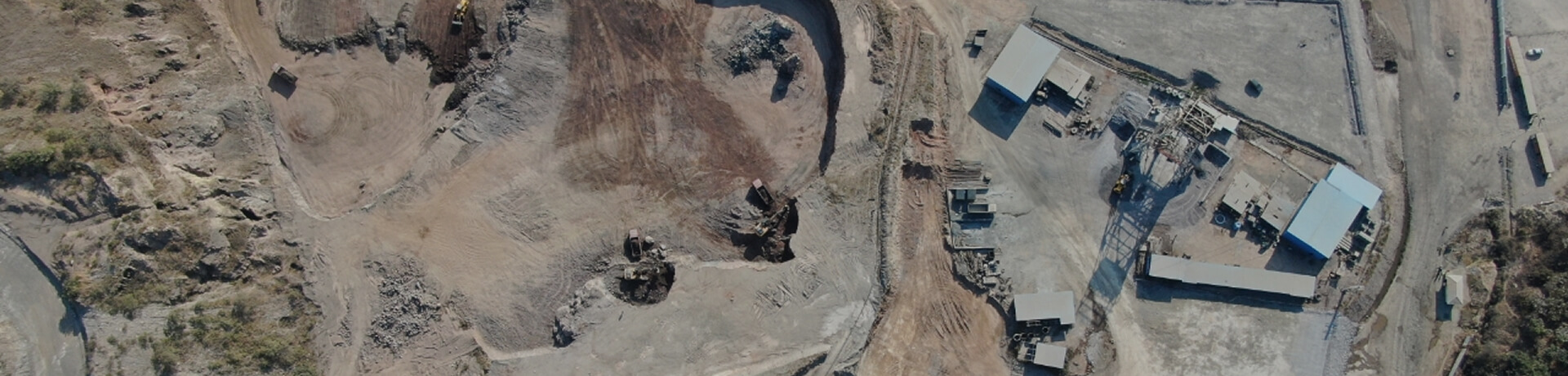
Choosing between rotary tricone vs DTH drilling cost per meter is not simply a matter of comparing purchase prices. Quarry managers searching for the best drilling method for hard rock quarry or trying to improve DTH drilling efficiency at depth must consider rate of penetration (ROP), specific energy, and total cost of ownership. Rock strength, borehole diameter, drilling depth, compressor capacity, bit consumption, hole deviation, fuel use, and labor can change the final cost by more than 30%.
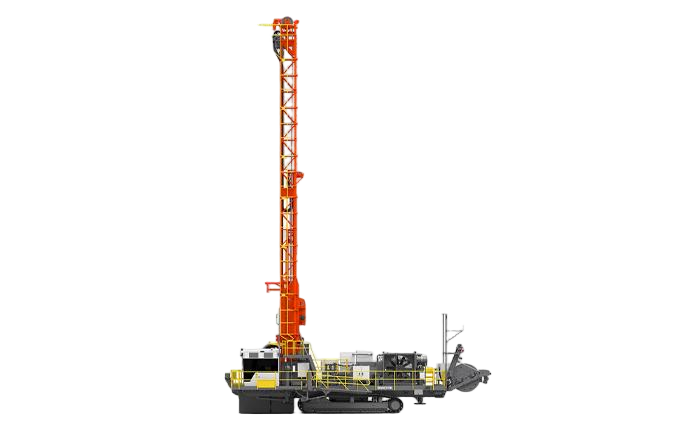
A drilling contractor may receive the same request from two very different customers: drill 165 mm blast holes in competent granite, complete 30 m water wells in fractured limestone, or produce 200 m exploration holes with minimal deviation. The equipment that performs well in one project may become the expensive option in another.
Rotary tricone drilling uses three rotating cones with milled or tungsten carbide inserts. The bit crushes, gouges, and chips the formation while the drill string transfers torque and weight to the bottom. DTH, or down-the-hole drilling, places a pneumatic hammer directly behind the bit. The hammer delivers repeated percussion at the face, while compressed air removes cuttings and cools the bit.
The common questions are practical:
The short answer is that DTH normally gains an advantage in hard, competent rock and relatively small-to-medium hole diameters, while rotary tricone drilling can become more economical in soft to medium formations, larger holes, deep drilling, and projects where compressor power is limited.
| Parameter | Rotary Tricone Drilling Rig | DTH Drilling Rig | Practical Cost Effect |
|---|---|---|---|
| Primary rock-breaking action | Rolling compression, crushing, and shearing | High-frequency pneumatic percussion with rotation | Determines ROP according to rock strength and abrasiveness |
| Typical hole diameter | 152–311 mm and larger, depending on rig class | 90–305 mm in common production applications | Large holes can increase air demand and bit cost for DTH |
| Typical hard-rock ROP | 5–18 m/h | 10–30 m/h | DTH often reduces drilling hours in competent rock |
| Typical soft or fractured formation ROP | 15–35 m/h | 6–20 m/h, with possible hole-collapse issues | Tricone may deliver lower cost per meter in softer ground |
| Energy source | Hydraulic rotation, feed, and dust or cuttings system | Hydraulic rotation and feed plus high-pressure compressed air | DTH compressor fuel may add 15–40% to operating cost |
| Hole deviation | Usually low in suitable formations and with correct stabilization | Often low in competent rock, but can increase in broken ground | Extra meters or redrilling directly raise cost |
| Bit service life | Approximately 100–500 m, highly dependent on formation | DTH button bits commonly 50–250 m | Consumable cost can outweigh hourly productivity |
| Noise and dust | Generally lower pneumatic noise; dust system remains necessary | Higher exhaust noise and dust volume without effective collection | May require enclosure, wet suppression, or extra PPE |
| Best operating range | Soft-medium formations, large diameters, and deep holes | Hard, competent formations and production blast holes | Formation matching is more important than machine brand |
A tricone bit depends on the relationship between weight on bit, rotary speed, tooth or insert design, and hydraulic cleaning. In compressive formations, the cones create localized stress that exceeds the rock’s compressive strength. If the applied weight is too low, the teeth rub instead of crushing. If the weight is too high, cone bearings and inserts can fail prematurely.
For a 200 mm hole in medium sandstone, a contractor may operate at approximately 60–120 rpm with a carefully controlled weight on bit. The correct value depends on bit design and formation. Increasing rotation without sufficient cuttings evacuation can polish the formation, raise torque, and reduce penetration rather than improve it.
In DTH drilling, the hammer is positioned close to the bit, so percussion energy is not lost through a long drill-string transmission path. This is particularly valuable in granite, basalt, quartzite, and strong limestone. The compressed-air system must provide adequate volume and pressure; a 165 mm production hole may require roughly 900–1,500 cfm at 20–30 bar, depending on hammer design, altitude, flushing conditions, and manufacturer specifications.
DTH does not automatically mean lower cost. Compressor fuel, air-end maintenance, hammer wear, shank adapters, and dust-control equipment must be included. A hammer operating below its designed air pressure may show a 20–40% reduction in penetration while still consuming nearly the same support resources.
The most useful calculation is not the hourly rental rate. It is:
Cost per meter = (machine cost + labor + fuel or electricity + compressor cost + maintenance + bit and hammer consumption + water or dust-control cost + mobilization allocation) ÷ productive drilled meters.
“Productive drilled meters” excludes rod changes, collaring, repositioning, bit changes, equipment breakdowns, and waiting for stemming or blasting crews. This distinction explains why a rig advertised at 25 m/h may produce only 14–18 m/h across a full shift.
Consider a 165 mm blast-hole program in hard granite. The figures below are representative planning values, not a guaranteed quotation.
| Cost Item | Rotary Tricone | DTH |
|---|---|---|
| Average productive drilling speed | 12 m/h | 21 m/h |
| Machine, operator, and routine maintenance | $135/h | $145/h |
| Fuel and support energy | $32/h | $78/h, including compressor |
| Consumables excluding bit | $16/h | $22/h |
| Bit or hammer-bit consumption | $1,050 per 180 m = $5.83/m | $520 per 110 m = $4.73/m |
| Calculated drilling cost before downtime | ($135 + $32 + $16) ÷ 12 + $5.83 = $21.08/m | ($145 + $78 + $22) ÷ 21 + $4.73 = $16.40/m |
In this granite example, DTH saves approximately $4.68 per meter, or about 22%, because its higher penetration rate offsets compressor expense. However, if DTH productivity falls from 21 m/h to 14 m/h because of poor air volume or fractured ground, its calculated cost rises to approximately $22.21/m. At that point, the rotary tricone option becomes financially comparable.
For a 10,000 m annual drilling program, the difference between $16.40/m and $21.08/m represents approximately $46,800 before tax, financing, and mobilization. That is why a short field trial is more reliable than selecting equipment from a brochure.
DTH is usually the first method to test when the formation has a high unconfined compressive strength, low-to-moderate fracture frequency, and blast-hole diameters below approximately 200 mm. Percussion energy at the bottom of the hole supports a higher ROP and generally produces clean cuttings when the compressor is correctly sized.
Rotary tricone drilling can still be competitive when the rig has high feed force, the bit is matched to the formation, and the quarry drills large-diameter holes. In very abrasive granite, however, tricone inserts and bearings may require frequent inspection. A 10-minute bit change repeated across 50 holes can remove several productive hours from a shift.
Rotary tricone drilling often performs better in soft limestone, marl, shale, and mixed overburden. The rolling cones can maintain a steady cutting action without the high air consumption associated with DTH. In clay-rich formations, DTH exhaust may carry sticky cuttings back into the hole and create plugging or wall instability.
When the formation changes every few meters, a tricone rig may also reduce tool-change frequency. A contractor drilling 250 mm holes through weathered limestone and harder bands may prefer a formation-tolerant tricone design rather than operating a high-pressure compressor continuously.
DTH is effective in hard, stable formations, but increasing depth increases air-line pressure losses and can reduce flushing efficiency. At 150–200 m, the compressor must overcome drill-string friction, atmospheric pressure changes, water inflow, and cuttings-loading effects. A tricone system using drilling fluid may offer better control in deep holes, especially where borehole stability is more important than maximum instantaneous ROP.
For water wells, the decision also depends on casing requirements, aquifer protection, borehole straightness, and the need to avoid excessive contamination from oil-injected compressed air. The cheapest meter is not useful if the final screen cannot be installed correctly.
Rotary systems generally become more attractive as hole diameter and depth increase. The air volume required by a large DTH bit can raise compressor size, transport cost, and fuel consumption sharply. For pile foundations, anchoring, and large-diameter production holes, rotary tricone or rotary drilling with casing may provide better torque control and hole-wall management.
A quarry supervisor using the initials M.K. shared a 2024 production log for a 165 mm granite blast-hole program. The site first used a rotary tricone rig at an average productive rate of 10.8 m/h. The crew recorded a tricone bit life of 160–190 m and an all-in drilling cost close to $22/m after fuel, operator time, and bit consumption were included.
The quarry then ran a DTH trial on 40 holes using a compressor rated above the hammer’s recommended air volume. The average productive rate reached 20.4 m/h, and the measured cost fell to about $17/m. M.K.’s important observation was not simply that “DTH was faster.” The lower cost occurred because the rig completed more holes during the same shift and reduced the blasting crew’s waiting time.
Three months later, the same site tested DTH in a fractured section. Productivity dropped to 13.6 m/h, cuttings return became inconsistent, and four holes required cleaning before loading. The measured cost increased to approximately $23/m. The supervisor therefore kept DTH for massive granite and used the tricone rig in broken zones. This mixed-fleet decision produced a better result than replacing every rotary machine.
A second contractor, operating a Haichuang Unite rotary drilling rig in medium-hard limestone, reported a different pattern in its internal job sheet: approximately 18 m/h over a 1,200 m program, with fewer compressor-related stoppages than its previous DTH setup. The contractor valued predictable maintenance and lower noise near a residential boundary more than the highest short-term penetration rate. That preference is a useful reminder that efficiency includes uptime, compliance, and scheduling—not only meters per hour.
Operators commonly praise DTH for its strong performance in hard rock, straight production holes, and fast collaring. The most repeated complaint is the cost of compressed air: compressor fuel, hose leaks, air-end service, and hammer wear can remain hidden until the monthly cost report is prepared.
Tricone users often value smoother operation across variable formations, lower pneumatic noise, and easier integration with existing Rotary Drilling Rigs. Their main complaints involve bit selection, bearing failure, and declining ROP when the bit becomes worn. Experienced drillers normally monitor torque, penetration per revolution, vibration, and cuttings shape instead of waiting for complete bit failure.
One operator described the practical difference this way: “DTH gives us the better number on the hard granite bench, but the tricone rig gives us fewer surprises when the hole changes.” That is not a universal verdict, but it reflects the risk trade-off many production teams face.
Haichuang Unite should be evaluated by the same criteria as any drilling equipment supplier: measured penetration, fuel consumption per meter, service response, component availability, dust-control integration, and resale or replacement support. A rig that costs less to purchase but loses two shifts waiting for a hydraulic or air-system component may have a higher total cost than a better-supported machine.
During an equipment evaluation, request a field demonstration or production trial under the intended hole diameter and formation. Record:
Haichuang Unite is particularly worth considering when the buyer needs a rotary drilling platform that can be configured for local quarry, water-well, anchoring, or construction requirements. The advantage should be confirmed through logged production data rather than assumed from a product label.
DTH drilling is generally suitable for contractors drilling hard granite, basalt, strong limestone, and similar formations where a correctly sized compressor can sustain high percussion energy. It is less suitable when air logistics are difficult, the formation collapses easily, or the hole diameter makes compressor costs disproportionate.
Rotary tricone drilling is suitable for soft and medium rock, large-diameter holes, deep drilling, mixed formations, and projects that prioritize stable operation with lower compressed-air demand. It is less suitable when maximum penetration in competent hard rock is the dominant production target.
The most defensible decision comes from a 200–500 m controlled trial. Compare productive meters, not headline ROP; include bit and hammer wear, not only fuel; and calculate cost per accepted hole, not merely cost per drilled meter. In hard granite, DTH may reduce cost by roughly 15–30%. In soft, fractured, deep, or large-diameter work, rotary tricone may equal or outperform it.
For the next step, prepare your formation description, target diameter, average depth, annual meterage, compressor availability, and local fuel price. Ask Haichuang Unite or other qualified suppliers to return a written comparison based on those conditions, then verify the assumptions with a field trial before committing to a single drilling method.
Previous:
None
We are dedicated to building a better future with you through meticulous and professional service!