
- Home
- Products +
- About Us +
- Projects
- Application +
- News +
- Contact Us
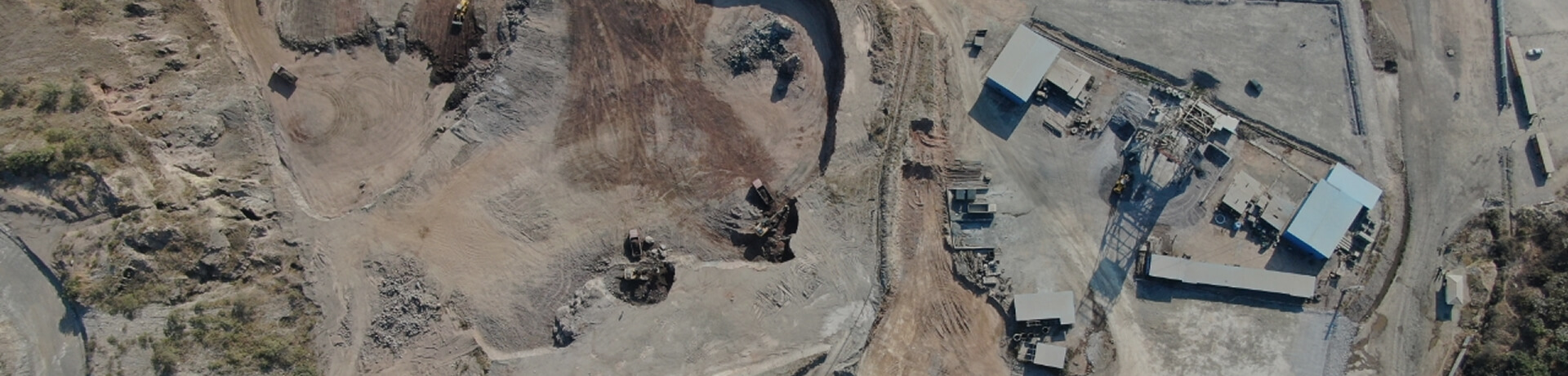
Mining projects are often located in challenging environments where terrain conditions and site accessibility significantly impact equipment performance, operational efficiency, and project costs. Selecting the right drilling rig is not simply about drilling depth or hole diameter; it also requires a thorough evaluation of ground conditions, transportation logistics, workspace limitations, and environmental factors.
Understanding how site accessibility and terrain influence drilling rig selection can help mining companies improve productivity, reduce downtime, enhance safety, and maximize return on investment.
Every mining site presents unique geographical challenges. A drilling rig that performs exceptionally well in one location may struggle in another due to differences in terrain and access routes.
Key factors that must be evaluated include:
A detailed site assessment allows operators to match drilling equipment with actual operating conditions, preventing costly equipment mismatches.
Accessibility refers to how easily drilling equipment can be transported, positioned, and operated at a mining location.
Many mineral deposits are located in isolated regions with limited infrastructure.
Common accessibility issues include:
For remote operations, compact and highly mobile drilling rigs often provide significant advantages.
These features reduce logistics costs and improve deployment speed.
Some mining operations are conducted in locations where large equipment cannot easily enter.
Examples include:
In these situations, smaller drilling rigs with a reduced footprint may be required.
Benefits include:
Open-pit mines often provide relatively stable and level working surfaces.
Suitable drilling rigs include:
Advantages:
Since mobility challenges are limited, operators can prioritize drilling performance and production capacity.
Mountain mining operations introduce significant challenges due to steep slopes and uneven surfaces.
For these environments, crawler-mounted drilling rigs are often preferred.
Crawler systems provide:
These characteristics allow safe operation on inclined surfaces where wheeled rigs may struggle.
Mining sites with exposed bedrock or highly irregular surfaces require equipment capable of maintaining stability.
Ideal features include:
Stable positioning directly affects drilling accuracy and operator safety.
Certain mining regions experience:
Heavy equipment may sink or become immobilized in such environments.
These features help maintain productivity despite difficult ground conditions.
High-altitude mining operations create additional challenges for drilling equipment.
Common issues include:
Examples include mining projects in:
When selecting a drilling rig for high-altitude environments, operators should verify:
Manufacturers often provide altitude-specific configurations to maintain performance.
Terrain challenges become even more complex when combined with adverse weather.
Heavy rainfall can cause:
Drilling rigs operating in rainy regions should offer:
Cold-climate mining operations face:
Suitable drilling rigs should include:
These modifications improve reliability during winter operations.
Not all mining sites offer sufficient room for large drilling equipment.
As pits deepen, working benches become narrower.
Challenges include:
Compact drilling rigs can improve maneuverability while maintaining production efficiency.
Underground environments require specialized drilling equipment due to space limitations.
Important considerations include:
Underground drilling rigs are typically designed with:
The ease of moving equipment between drilling locations directly impacts project efficiency.
Advantages:
Best for:
Advantages:
Best for:
Although transportation may require trailers, crawler rigs often outperform wheeled alternatives in challenging environments.
Safety remains one of the most important factors in drilling rig selection.
Terrain-related hazards include:
Modern drilling rigs improve safety through:
Selecting equipment with terrain-adapted safety features helps reduce operational risks and protect personnel.
Selecting a drilling rig that matches site conditions delivers measurable financial benefits.
Proper equipment selection can lower:
The right rig achieves:
Operating equipment within its intended terrain conditions minimizes mechanical stress and prolongs service life.
Before investing in a drilling rig, mining companies should evaluate:
Answering these questions helps identify the most suitable drilling solution for long-term operational success.
Site accessibility and terrain conditions play a decisive role in drilling rig selection for mining operations. Factors such as slope gradients, ground stability, weather conditions, transportation logistics, workspace limitations, and altitude can significantly influence equipment performance and project profitability.
By conducting a comprehensive site assessment and choosing a drilling rig specifically designed for local conditions, mining companies can improve operational efficiency, enhance safety, reduce maintenance costs, and achieve more reliable drilling performance throughout the life of the project.
We are dedicated to building a better future with you through meticulous and professional service!