
- Home
- Products +
- About Us +
- Projects
- Application +
- News +
- Contact Us
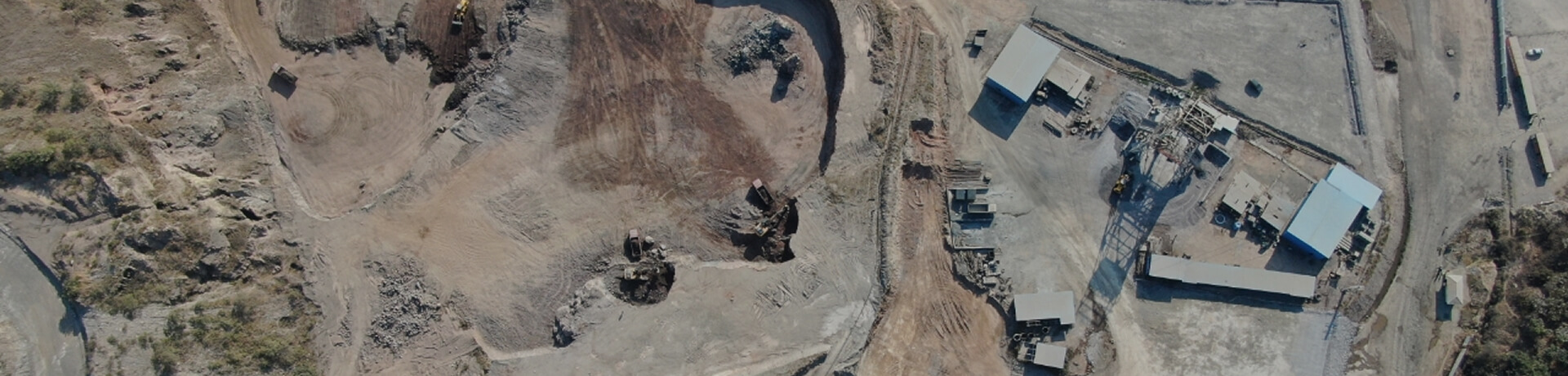
Choosing the correct bit diameter is one of the fastest ways to improve drilling accuracy, fragmentation, and operating cost. In this guide, we explain How Large-Diameter Rotary Drill Bits Are Sized for Blasthole and Pre-Split Applications and provide a practical process: identify the required hole diameter, calculate operating clearance, verify the drill string and formation, then confirm bit dimensions and wear limits with the manufacturer. Using this method, we can help mining contractors select Rotary Drilling Tools that deliver stable penetration and consistent hole quality.
A rotary drill bit is not sized only by the nominal outside diameter stamped on the tool. The effective drilling diameter depends on several factors:
An undersized bit can reduce the finished hole diameter, restrict explosive loading, and increase the risk of decking or poor energy distribution. An oversized bit may increase fuel consumption, vibration, cuttings volume, and drilling cost without improving blast results.
For this reason, How Large-Diameter Rotary Drill Bits Are Sized for Blasthole and Pre-Split Applications must be treated as an engineering calculation rather than a simple catalog selection.
The starting point is the required finished hole diameter.
The mine plan normally specifies the target diameter based on:
For example, a production blasthole may require a finished diameter of 250 mm, 270 mm, or 311 mm. A pre-split hole may use a smaller diameter, such as 89 mm to 165 mm, depending on the rock mass, bench geometry, and desired crack control.
The required diameter should be recorded as:
Target finished hole diameter = Dₜ
A new roller-cone or rotary drill bit is larger than the minimum acceptable finished diameter because the cutting structure and gauge protection gradually wear.
A practical sizing model is:
New bit diameter = Target finished diameter + expected gauge loss + operational tolerance
For example:
| Application | Target finished hole | Expected gauge loss | Suggested new-bit range |
|---|---|---|---|
| Production blasthole | 250 mm | 2–4 mm | 252–254 mm |
| Large production blasthole | 311 mm | 3–5 mm | 314–316 mm |
| Pre-split hole | 115 mm | 1–2 mm | 116–117 mm |
| Abrasive formation | 200 mm | 3–6 mm | 203–206 mm |
These figures are planning examples, not universal specifications. We recommend confirming the allowance through historical gauge measurements from the same formation and drilling method.
The bit must create a hole large enough for reliable cuttings evacuation. In broken, swelling, or heavily fractured ground, the effective hole size can be reduced by wall sloughing and cuttings accumulation.
The selection team should review:
A bit with the correct nominal diameter can still produce poor blasting results if the hole is not properly cleaned and maintained.
Blasthole drilling prioritizes production rate, consistent hole volume, and suitable explosive distribution. The bit diameter must match the blast design and the capabilities of the rotary drill rig.
For production drilling, we normally evaluate:
A large-diameter roller-cone bit may use milled-tooth or tungsten-carbide insert cutting structures. Milled-tooth designs can be effective in softer formations, while tungsten-carbide insert bits are commonly selected for harder and more abrasive rock.
The bit must also be compatible with:
Assume a quarry requires a 311 mm finished hole and the formation causes approximately 4 mm of gauge wear during the planned service interval.
A reasonable engineering starting point is:
The final selection should then be checked against the drill rig’s maximum bit diameter, available air volume, and blast-design requirements.
With Haichuang Unite Rotary Drilling Tools, buyers should provide the target hole diameter, formation description, drill model, connection type, and operating parameters before requesting a final quotation. This reduces the risk of receiving a bit that fits the thread but does not perform correctly in the formation.
Pre-splitting is more sensitive to hole deviation, spacing, and wall damage than standard production blasting. The purpose is to create a controlled fracture plane along the final excavation boundary.
For pre-split drilling, the correct bit size depends on:
A larger hole may permit a larger explosive cartridge, but it can also increase the disturbed zone if the charge is not properly decoupled. A smaller, accurately aligned hole may deliver better perimeter control even when its drilling rate is lower.
Before selecting the bit, we recommend confirming:
For pre-split work, gauge retention is especially important. If the bit wears below the design diameter, the explosive column and decoupling ratio can change. This may result in excessive backbreak, uneven final walls, or incomplete separation along the perimeter.
A reliable sizing process must continue after the engineering calculation. Manufacturing and inspection determine whether the delivered bit actually matches the approved drawing.
The inspection plan should include:
For critical gauge measurements, a calibrated coordinate measuring machine or precision diameter gauge can verify dimensions to 0.01 mm, where the approved drawing and measurement method support that resolution.
Haichuang Unite can structure inspection records around:
A practical export-quality program should target 100% final inspection for critical dimensions, connection integrity, and visible manufacturing defects.
Depending on the bit design, inspection may include:
Testing procedures may reference recognized methods such as:
The applicable standard should be agreed in the technical specification. Standards do not replace a product drawing; they support consistent verification against the required design.
!
When we help a drilling contractor select Rotary Drilling Tools, we recommend following this sequence.
Prepare the following information:
Use the target hole diameter plus a realistic wear allowance. Avoid adding excessive allowance, because an oversized bit can increase power demand and vibration.
Select milled teeth, tungsten-carbide inserts, or another suitable cutting structure according to formation conditions. The goal is not simply maximum hardness. The cutting structure must balance penetration rate, impact resistance, wear resistance, and service life.
Verify:
Before production, confirm the drawing for:
Record the following after each drilling shift:
This data helps determine whether the initial sizing calculation was correct or needs adjustment.
Possible causes include excessive gauge wear, poor flushing, unstable ground, or incorrect bit selection.
Recommended actions:
Backbreak may result from oversized holes, excessive charge energy, poor decoupling, or hole deviation.
To reduce the problem:
Low penetration can be caused by unsuitable tooth geometry, insufficient weight-on-bit, low air volume, worn cutters, or excessive rotary speed.
The solution is to review drilling parameters together with bit design. Increasing rotary speed alone may accelerate cutter wear and reduce total meters drilled.
A bit can have a compatible connection and still be unsuitable for the formation. Buyers should provide operating data rather than ordering only by thread size. Haichuang Unite technical teams can use this information to recommend the correct diameter, cutter structure, bearing configuration, and flushing design. For urgent export inquiries, a 24-hour response target can help reduce equipment downtime, subject to project and time-zone requirements.
To reduce delays and incorrect orders, we recommend using a standardized inquiry sheet containing:
Useful resources include:
The more complete the technical data, the less likely the project is to experience wrong-size deliveries, premature gauge wear, or inconsistent blast results.
The essential principles behind How Large-Diameter Rotary Drill Bits Are Sized for Blasthole and Pre-Split Applications are straightforward:
By applying these steps, Haichuang Unite helps mining and quarrying businesses select Rotary Drilling Tools that support stable penetration, reliable hole diameter, improved fragmentation, and better perimeter control. When the bit diameter, cutting structure, drilling parameters, and inspection plan are aligned, How Large-Diameter Rotary Drill Bits Are Sized for Blasthole and Pre-Split Applications becomes a repeatable engineering process rather than a costly trial-and-error decision.
We are dedicated to building a better future with you through meticulous and professional service!