
- Home
- Products +
- About Us +
- Projects
- Application +
- News +
- Contact Us
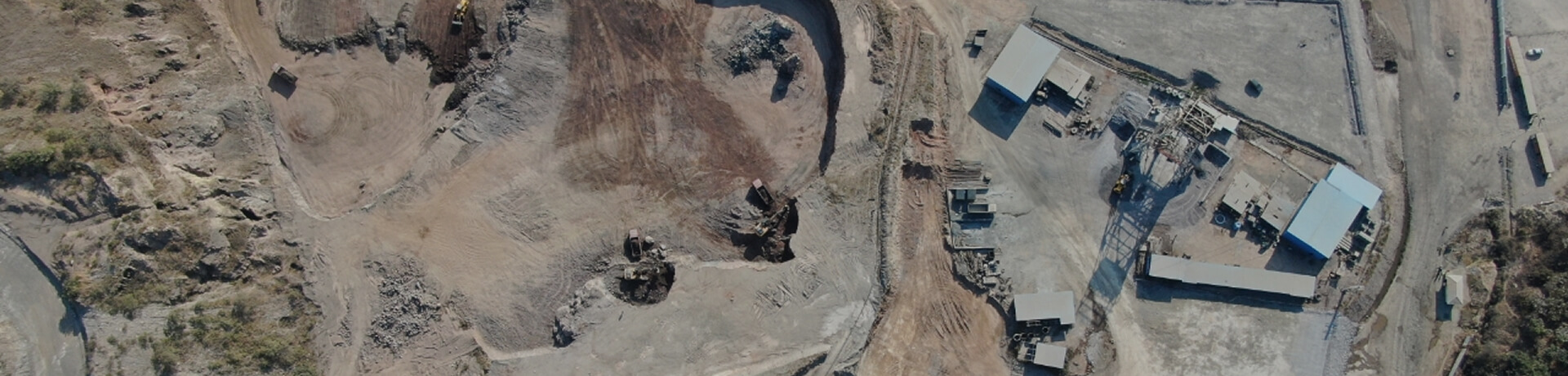
Rock Drilling Tools help mining, quarrying, construction, tunneling, and water-well crews make clean holes with less downtime. The right tool must match the rock’s strength, abrasiveness, fracture pattern, drilling method, and machine power. This guide explains how to select rock drilling tools for hard rock, compare drill bit materials, reduce premature wear, and improve drilling control. It also covers down-the-hole systems, carbide button bits, maintenance, and safe operating steps.
A bit that works well in soft limestone may fail quickly in quartz-rich granite. Choosing the wrong insert shape can cause slow penetration, high vibration, excess air use, or broken carbide buttons. A practical selection process starts with rock data, then matches the bit design and drilling parameters to the job.
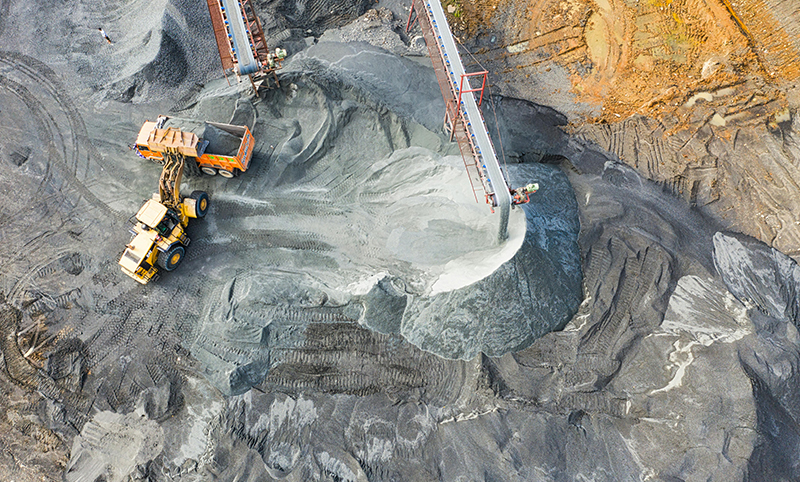
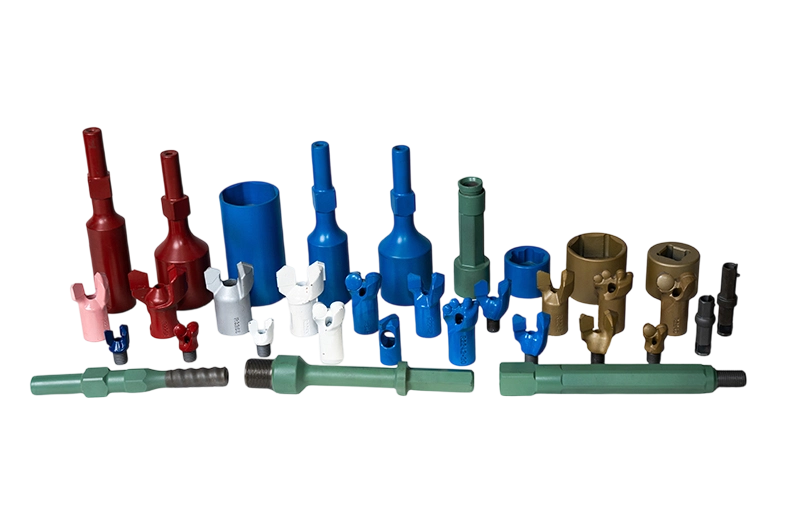
Rock drilling tools are wear-resistant components used to break and remove rock during rotary, rotary-percussive, top-hammer, and down-the-hole drilling. A complete system may include:
Two important industry terms are penetration rate and specific energy. Penetration rate is the distance drilled per unit of time, such as meters per hour. Specific energy is the energy used to remove a unit volume of rock. A high penetration rate is not always efficient if it causes excessive bit wear, poor hole quality, or frequent tool changes.
Drilling cost is influenced by more than the purchase price of a bit. The real cost includes drilling time, compressed-air or water use, labor, tool changes, machine wear, and the risk of an abandoned or inaccurate hole.
Correctly matched tools can help operators:
The best choice depends on the whole drilling system. A premium bit cannot compensate for insufficient air pressure, excessive feed force, a worn shank, poor alignment, or blocked flushing channels.
Rock hardness and rock abrasiveness are related, but they are not the same. Hardness describes how difficult the rock is to indent or fracture. Abrasiveness describes how quickly the rock wears steel and carbide surfaces.
Quartz-rich sandstone can be highly abrasive even when its compressive strength is lower than that of some massive igneous rocks. A fractured granite may be hard but less damaging to the bit than a dense, silica-rich formation. This is why one number should not determine the entire tool selection.
Uniaxial compressive strength, or UCS, is often used in rock mechanics to describe the load a rock can withstand before failure. The following ranges are general guides, not universal design limits:
| Rock classification | Approximate UCS range | Typical examples | Common drilling concern |
|---|---|---|---|
| Very weak to weak | Below 25 MPa | Weathered shale, soft claystone | Hole collapse, clogging, overbreak |
| Medium strength | 25–75 MPa | Weak limestone, some sandstones | Cutting removal and bit plugging |
| Strong | 75–150 MPa | Sound limestone, hard sandstone | Carbide wear and vibration |
| Very strong | 150–250 MPa | Granite, basalt, dense quartzite | Low penetration and insert damage |
| Extremely strong | Above 250 MPa | Some dense quartz-rich formations | High impact demand and severe wear |
These values should be confirmed through geological testing, drilling records, or a site trial. The International Society for Rock Mechanics and Rock Engineering publishes recognized guidance for rock testing and classification. Its methods are useful when a project needs laboratory-based strength data rather than visual estimates.
The main working materials in many percussive rock bits are alloy steel bodies and cemented carbide inserts. Cemented carbide commonly uses tungsten carbide particles held in a cobalt-based binder. Tungsten carbide provides high hardness and wear resistance, while the binder adds toughness and helps the insert resist impact.
| Button shape | Main benefit | Typical use |
|---|---|---|
| Spherical or round | High impact strength and good resistance to breakage | Hard, fractured, or variable rock |
| Ballistic or pointed | Higher initial penetration and sharper rock contact | Medium to hard formations when penetration is the priority |
| Parabolic | Balance between penetration and wear resistance | Mixed ground and general-purpose drilling |
| Conical | Focused crushing action | Selected hard-rock applications with controlled drilling parameters |
| Flat-top | Strong support behind the cutting edge | Abrasive formations and applications that require longer wear life |
Pointed inserts can increase penetration in suitable ground, but they may be more sensitive to impact damage in broken rock. Spherical buttons usually offer better resistance to cracking and spalling. The correct balance depends on impact energy, rotation speed, feed force, hole diameter, and rock structure.
Carbide grade selection should be handled with the bit manufacturer. A harder carbide grade may improve wear resistance, while a tougher grade may better withstand impact. Increasing hardness without considering impact can cause edge chipping or complete insert failure.
Top-hammer drilling creates impact energy in a drifter outside the hole. The energy travels through the shank and rods to the bit. This method is common in quarrying, construction, small underground headings, scaling, and surface drilling.
Top-hammer systems require good rod alignment. Bent rods, loose connections, or worn threads can reduce energy transfer and increase vibration. Operators should also watch for excessive rotation speed, which can polish the hole wall instead of improving rock breakage.
In a DTH system, the pneumatic hammer operates directly behind the bit. This design delivers impact energy close to the rock face and can provide consistent hole performance at greater depths than some top-hammer arrangements.
Down-the-hole rock drilling tools are widely used for:
DTH performance depends heavily on compressor capacity, air pressure, air volume, hammer design, bit diameter, and formation conditions. If air volume is too low, cuttings may remain in the hole and cause regrinding, slower penetration, and higher wear.
Rotary systems rely mainly on rotation and feed force. They are often used in softer formations or with large-diameter tools. Rotary-percussive systems combine rotation with impact and are useful when the rock is too strong for efficient rotary cutting alone.
For rotary drilling, tool selection should consider cutter geometry, torque, thrust, flushing, and the risk of formation swelling. For rotary-percussive drilling, impact frequency and energy must be balanced with rotation speed and feed pressure.
Mining operations use drilling tools for blast holes, production holes, roof bolting, long-hole drilling, exploration, and ground control. Tool choice affects fragmentation, dilution, hole deviation, and cycle time.
In underground mining, compact tools and reliable flushing are important because access is limited. In open-pit mining, large DTH or rotary systems may be selected for long production holes. The bit must also match the planned explosive diameter and the mine’s drilling pattern.
Quarries need accurate holes for controlled blasting and bench development. A worn gauge button can reduce hole diameter and increase deviation. This may affect explosive placement and fragment size.
Operators should check the bit gauge at planned intervals. If the hole diameter falls below the required tolerance, replacing the bit may cost less than dealing with poor blast results.
Construction projects use rock drilling tools for anchor holes, micropiles, soil nails, demolition, utility work, and tunnel support. Hole accuracy is important because anchors and bolts must reach the designed depth and position.
In fractured ground, casing systems or special drilling methods may be needed to keep the hole open. A standard bit alone cannot solve severe ground collapse.
Water-well and geothermal work often require long drilling distances, reliable cuttings removal, and stable borehole walls. DTH bits are common in hard formations, while rotary systems may be used in softer overburden.
Air or fluid selection must consider groundwater, formation stability, environmental rules, and the risk of contaminating the hole.
Collect the available geological information before ordering tools. Record:
Check the drill rig’s impact energy, rotation range, feed force, compressor output, shank connection, and maximum rod length. A bit must fit both the mechanical connection and the operating limits of the machine.
Match the bit diameter to the required hole size and expected gauge wear. Select button shape based on whether the job needs greater penetration, stronger impact resistance, or longer wear life.
Begin with the manufacturer’s recommended range for:
Do not increase feed pressure simply because penetration slows. A slow rate may indicate blocked flushing, worn buttons, low air volume, incorrect rotation speed, or a change in geology.
Track meters drilled, drilling time, fuel or air use, bit condition, hole diameter, and the number of tool changes. A simple field record makes comparison easier than relying on memory.
For example, compare two bits over the same 100-meter section. Record total drilling hours, average penetration rate, gauge loss, carbide damage, and cost per meter. Cost per meter is calculated as:
Cost per meter = total drilling and tool cost ÷ meters drilled
This measure is more useful than comparing purchase prices alone.
Inspect the buttons for polishing, cracking, spalling, and uneven wear. Check the gauge row, flushing holes, bit face, threads, shank, and rod connections. Then adjust one factor at a time so the effect can be identified.
Carbide buttons should not be welded, hammered, or ground without an approved repair procedure. Tungsten carbide can chip under sudden impact, and damaged inserts may create a safety risk.
| Problem | Possible cause | Recommended check |
|---|---|---|
| Penetration suddenly drops | Worn buttons, blocked flushing, geology change, low impact energy | Inspect the bit, air or water flow, and machine pressure |
| Buttons break | Excessive feed, hard fractured rock, poor alignment, impact overload | Reduce feed, check alignment, and consider a tougher insert profile |
| Hole diameter becomes too small | Gauge-button wear or abrasive formation | Measure the gauge and replace or service the bit |
| High vibration | Bent rod, uneven bit wear, loose connection, unstable ground | Check the complete drill string and hole condition |
| Cuttings return is poor | Low air volume, blocked passages, excessive water, collapsed hole | Check flushing capacity and borehole stability |
| Tool joints loosen | Incorrect tightening, damaged threads, insufficient cleaning | Clean, inspect, and tighten according to the manufacturer’s procedure |
Rock drilling creates flying fragments, high noise, dust, vibration, compressed air hazards, and rotating equipment risks. A safe work plan should include:
The U.S. Mine Safety and Health Administration and the Occupational Safety and Health Administration provide safety guidance for mining, compressed-air equipment, silica exposure, and machine operation. Local regulations should always take priority on the jobsite.
Compare suppliers using field performance rather than catalog claims alone. Ask for:
A useful supplier should help diagnose the complete drilling system. If a company only recommends a larger or harder bit without checking air capacity, alignment, or ground conditions, the recommendation may not solve the actual problem.
Haichuang Unite can be considered when a project needs matched drilling components rather than an isolated replacement bit. The selection should be based on hole diameter, drilling method, rock classification, carbide button profile, shank type, and machine parameters.
Before placing an order, provide the supplier with the rock type, approximate UCS, abrasiveness, hole size, drilling depth, rig model, hammer or drifter model, compressor data, and current tool performance. These details help the technical team recommend a suitable configuration and reduce trial-and-error purchases.
There is no single best bit for every hard formation. A robust bit with impact-resistant carbide buttons is often suitable for hard or fractured rock, while a wear-resistant design may be better for highly abrasive rock. The final choice should consider UCS, quartz content, fractures, bit diameter, impact energy, and flushing.
Pointed buttons can provide strong initial penetration in suitable rock. Spherical buttons usually tolerate impact and fractured ground better. If the formation changes between solid and broken rock, a balanced or tougher button design may reduce breakage.
Replacement depends on gauge loss, penetration rate, carbide damage, hole quality, and cost per meter. A bit should not be replaced only by calendar time. Measure its performance and inspect it at regular intervals.
Common causes include abrasive minerals, excessive feed pressure, incorrect rotation speed, poor flushing, misalignment, low-quality carbide support, and continuing to use a bit after severe gauge wear. Check the bit and the full drill string before changing only the bit.
A general-purpose bit can handle a moderate range of conditions, but it may not deliver the lowest cost per meter in both soft and hard rock. Soft ground may need better cuttings clearance, while hard ground may need stronger carbide support and impact resistance.
Send the rock type, UCS if available, hole diameter and depth, drilling method, rig and hammer model, rod or shank connection, compressor output, current penetration rate, tool life, and photos of worn buttons. Photos of the bit face and gauge row are especially useful.
Start with alignment, flushing, bit condition, rotation speed, feed pressure, and connection tightness. Removing cuttings more effectively and using a bit matched to the formation can improve performance without increasing machine size.
Start by identifying the rock’s strength, abrasiveness, fractures, and moisture conditions. Then confirm the drill rig, hammer, shank, compressor, hole size, and required depth. Select the drill bit material and button insert profile together, test the tool over a measured section, and compare cost per meter rather than purchase price alone.
For the next step, read the manufacturer’s user guide, review the bit and hammer operating limits, and prepare your site data before contacting a technical supplier. If you need help comparing carbide button bits for mining, DTH hammers, top-hammer tools, or custom configurations, contact Haichuang Unite for an application review and field trial plan.
We are dedicated to building a better future with you through meticulous and professional service!