

- Home
- Products +
- About Us +
- Projects
- Application +
- News +
- Contact Us
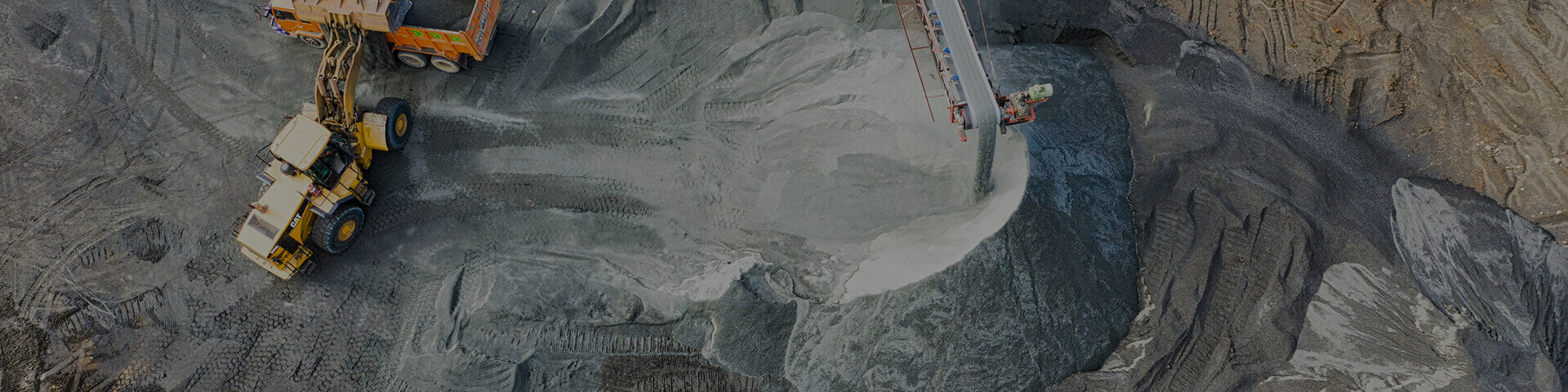
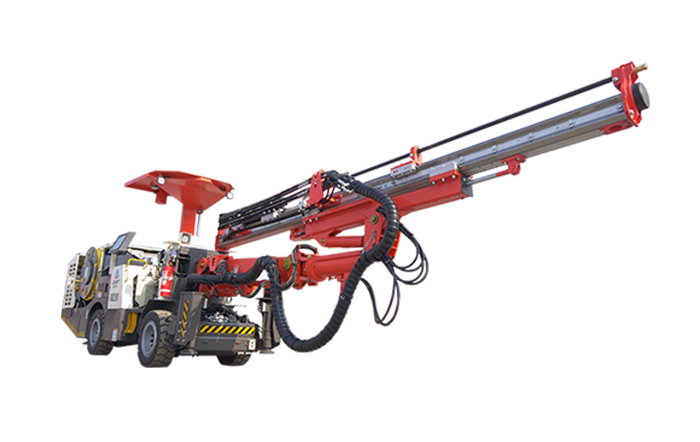
The LGMRT UD291 is a compact and agile single-arm electrically controlled hydraulic development drilling rig, suitable for small-to-medium sized underground mine roadways and engineering tunnels, with a maximum working cross-section of 24 square meters.
The UD291 is equipped with a 20kW Sandvik LD60 hydraulic rock drill, delivering high-speed, steady-rate drilling in all rock types while effectively extending drill bit lifespan. Equipped with a robust LG-B14F drill arm, its feed beam rotates 360° and features excellent self-leveling capability, providing broader and more optimal cross-section coverage. This enables fast, stable, and precise tunneling drilling while accommodating multiple drilling operations. The direct-control LG-CBI drilling hydraulic system incorporates automated control functions, allowing operators to focus on safe, efficient, and precise drilling operations.
Product Advantages
High Reliability
The key components are high-quality international brands, such as Rexroth, Parker, Eaton and Schneider, which comprehensively establish a solid foundation for operational performance.
Easy to Operate
The beam automatically levels itself, paired with a rock-adaptive drilling control system featuring impact tracking and anti-clamp functions. The ergonomic layout of travel and drilling controls ensures effortless operation while providing a wide field of view for safe and efficient work.
Easy to Maintain
Provides rapid pressure measurement points for convenient and efficient operation. Daily maintenance utilizes floor-standing operation for hassle-free, effortless upkeep, significantly boosting maintenance efficiency.
High Safety
Equipped with FOPS & ROPS certified safety cab. Features comprehensive safety warning and interlock systems to mitigate operational hazards in all respects.
Parameters
|
Coverage area (m²) |
24 |
|
Rock drill (kW) |
Sandvik LD60 / 20 |
|
Feed |
LG-CF3700 |
|
Boom |
LG-B14F |
|
Hole diameter (mm) |
32-45 (76-127) |
|
Hole depth (mm) |
3,440 |
|
T-section width in turning (mm) |
2,400 |
|
Steering Angle (°) |
±35 |
|
Transport length (mm) |
10,450 |
|
Transport width (mm) |
1,400 |
|
Transport height (mm) |
1,860 / 2,750 |
|
Weight (kg) |
10,500 |
One of the primary applications for a Single-boom Development Drilling Rig is underground mine roadway excavation.
The rig drills the blast-hole pattern required for each development round, including:
Accurate drilling helps improve blasting efficiency and supports consistent tunnel advance.
Mine drifts and crosscuts often have relatively compact cross-sections.
A single-boom drilling rig provides sufficient coverage while remaining maneuverable in restricted underground environments.
The machine can be repositioned efficiently between development faces.
The rig can also be used in smaller civil engineering tunnel projects.
Applications may include:
Flexible boom positioning helps adapt to different excavation profiles.
For underground chambers with moderate cross-sections, the rig can be used to drill blast holes for staged excavation.
Accurate boom positioning helps operators adapt drilling patterns to more complex chamber geometries.
Selecting the correct boom configuration depends largely on tunnel size and required productivity.
| Factor | Single-boom Rig | Multi-boom Rig |
| Typical Tunnel Size | Small to Medium | Medium to Large |
| Machine Size | Compact | Larger |
| Maneuverability | High | Moderate |
| Number of Drilling Booms | 1 | 2 or More |
| Initial Investment | Generally Lower | Higher |
| Drilling Productivity | Suitable for Moderate Production | Higher Face-drilling Output |
| Best Application | Mine Roadways & Small Tunnels | Large Tunnel Development |
For smaller underground roadways, a Single-boom Development Drilling Rig often provides a more economical solution.
The first consideration is the required working envelope.
Provide:
This determines whether the boom can reach all required drill-hole positions.
Rock properties influence:
Harder formations generally require stronger drilling performance.
Development round length affects:
The feed beam should be matched to the planned excavation round.
The required number and location of blast holes determine the necessary boom flexibility.
Complex tunnel profiles generally benefit from greater boom rotation and automatic positioning capability.
The machine's transport dimensions should be checked against:
Compact rigs are particularly valuable where access is limited.
Mine planners should estimate:
This helps determine whether a single-boom configuration can meet production targets.
Drilling cost is only one part of underground excavation cost.
Improved drilling accuracy can also influence:
Precise face drilling helps improve the consistency of the entire drill-and-blast cycle.
For contractors and mining operators, this can translate into lower cost per meter of tunnel advance.
To recommend the appropriate Single-boom Development Drilling Rig, please provide:
Based on these details, we can recommend a suitable drilling rig configuration.
Our Single-boom Development Drilling Rigs are designed around the practical requirements of underground mine operators and tunnel contractors.
Key advantages include:
The result is a practical underground drilling solution that balances drilling productivity, maneuverability, safety and operating cost.
A Single-boom Development Drilling Rig is an underground drilling machine equipped with one drilling boom and hydraulic rock drill.
It is primarily used to drill blast-hole patterns for mine roadway and tunnel excavation.
Single-boom rigs are generally suitable for small- and medium-sized tunnel sections.
Depending on the model, the maximum working cross-section can reach approximately 24 m².
Its main advantage is the combination of compact dimensions, flexible maneuverability and sufficient drilling coverage for smaller tunnels.
It can also require lower investment compared with larger multi-boom drilling jumbos.
Yes.
With a high-performance hydraulic rock drill and correctly selected drilling tools, the rig can operate in various rock formations, including hard rock.
Actual penetration performance depends on geology, drill bit selection and drilling parameters.
Automatic leveling reduces the amount of manual boom adjustment required when moving between drilling positions.
This helps improve hole angle consistency and drilling efficiency.
Anti-clamping control detects abnormal drilling resistance and adjusts drilling parameters to reduce the risk of drill steel becoming stuck in the hole.
This helps protect drilling components and reduce downtime.
Accurate drilling helps ensure that blast holes follow the designed pattern.
This can improve blasting results, reduce overbreak and produce a more consistent excavation profile.
A compact machine with accessible service points can simplify underground maintenance.
Ground-level service access and convenient pressure measurement points help maintenance teams perform inspections and troubleshooting more efficiently.
A suitable Single-boom Development Drilling Rig can help improve drilling accuracy, reduce face-drilling cycle time and support more consistent underground excavation.
For small- and medium-section mine roadways and engineering tunnels, the combination of a compact chassis, powerful hydraulic rock drill, flexible boom positioning and intelligent drilling control provides an efficient solution for drill-and-blast development.
Send us your tunnel dimensions, rock hardness, hole depth, drilling pattern and required development rate, and we can recommend a suitable Single-boom Development Drilling Rig configuration for your underground project.
Contact us for specifications, configuration recommendations and quotation.

FAQ
Do you provide technical support?
Yes. We provide professional pre-sales, in-sales, and after-sales support, along with expert technical guidance and usage precautions.
Sales Coverage
We supply specialized products to customers worldwide.
Do you provide technical support?
Yes. We provide professional pre-sales, in-sales, and after-sales support, along with expert technical guidance and usage precautions.
Warranty Policy
We provide repair service if there is necessary
Payment Methods
30% advance payment,70% balance payment before shipment
Latest Products
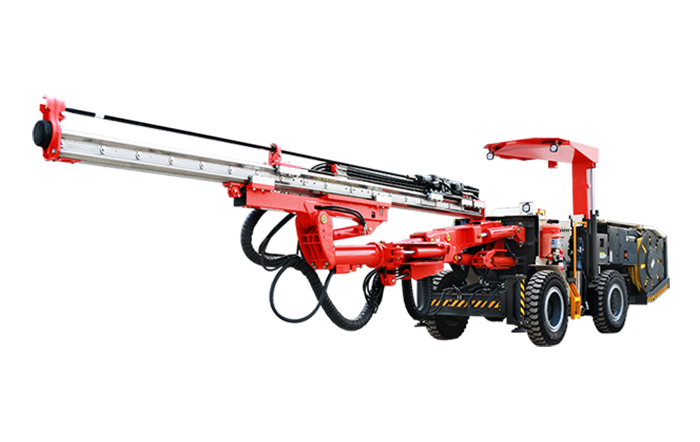
UD391H Single-boom Development Drilling Rig
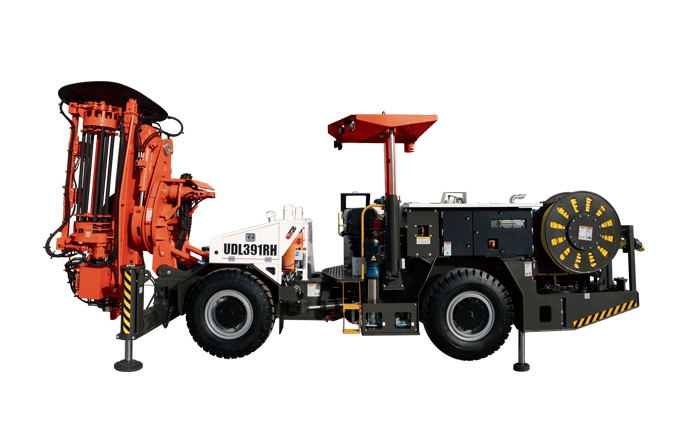
UDL391RH Long Hole Drilling Rig
We are dedicated to building a better future with you through meticulous and professional service!